hankyoreh
Links to other country sites 다른 나라 사이트 링크
How much is the US willing to risk for the Strait of Hormuz?
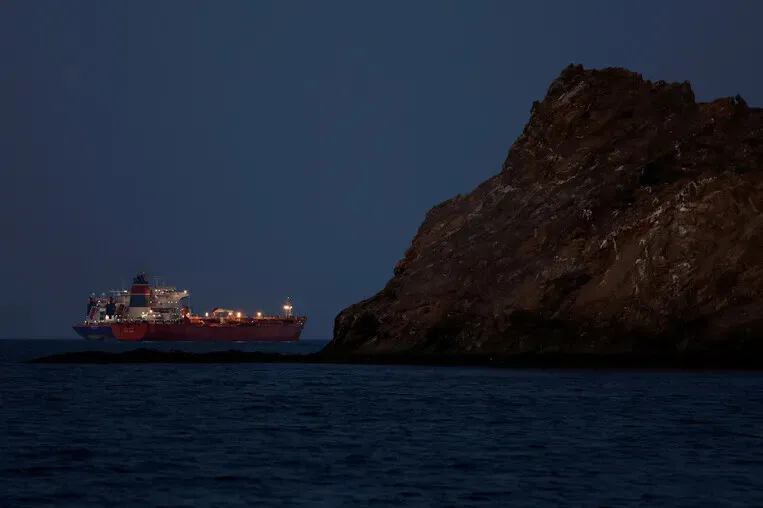
Never before has the Strait of Hormuz, a vital artery for the global oil trade, been so throttled. Iran’s determination to ensure the survival of its regime by controlling the strait is colliding with the US’ push to bring Tehran to its knees, fueling fears of a major military confrontation.
Conflict surrounding the Strait of Hormuz peaked on April 14, 1988, when the US Navy’s frigate USS Samuel B. Roberts nearly sank after striking an Iranian mine. Four days later, on April 18, the US Navy launched Operation Praying Mantis, a mission that sought to seek revenge on Iranian naval targets.
The attack sank two Iranian oil platforms, two frigates, and several fast-attack craft and a number of armed boats. The US claimed that the operation, said to be the biggest naval operation since World War II, destroyed half of Iran’s operational naval forces.
This battle, however, took place outside of the Strait of Hormuz’s bottleneck, and only lasted for a day. While the region was on a knife-edge, the strait remained open.
While the flow of merchant ships was heavily reduced during the Iran-Iraq War (1980-1988) as both nations attacked each other’s tankers, a blockade was not imposed on the strait. The strait remained open as oil sales via the strait were crucial for both countries’ war efforts and national financial situations.
Forty years have passed, and the war triggered by US-Israeli strikes on Iran has created the unprecedented crisis of a potential full-scale war in the Hormuz bottleneck. Iran, pushed to the brink of regime collapse, has moved to close the strait despite its economic toll and international condemnation.
The situation could reach a tipping point once US naval forces, including aircraft carriers currently deployed in the eastern Mediterranean and Arabian Sea, enter the Strait of Hormuz. To Iran, which has lost its supreme leader and suffered over 10 days of US-Israeli airstrikes, defending the Strait of Hormuz has become tantamount to survival; as such, it is preparing to strike back.
Iran is expected to mobilize asymmetric warfare tactics optimized for the strait’s narrow terrain, employing not only mines but also anti-ship missiles, suicide drones, numerous fast-attack crafts, and small submarines. If Iran announces it has laid mines, the US must deploy minesweepers to clear them — operations that will make them highly vulnerable to enemy attack.
If the US has any hope of defeating Iran’s military forces and taking control of the strait, it will likely need to wage a prolonged, large-scale naval and air campaign and be prepared for significant casualties. In this case, the Strait of Hormuz may be closed even longer.
By Jung E-gil, staff reporter
Please direct questions or comments to [english@hani.co.kr]

Editorial・opinion
![[Editorial] PPP leader puts party over country by driving wedge in US alliance](https://flexible.img.hani.co.kr/flexible/normal/500/300/imgdb/original/2026/0512/7217785750956023.jpg "[Editorial] PPP leader puts party over country by driving wedge in US alliance") [Editorial] PPP leader puts party over country by driving wedge in US alliance
[Editorial] PPP leader puts party over country by driving wedge in US alliance![[Column] Russia and North Korea: An alliance of desperation](https://flexible.img.hani.co.kr/flexible/normal/500/300/imgdb/original/2026/0511/5717784883680777.jpg "[Column] Russia and North Korea: An alliance of desperation") [Column] Russia and North Korea: An alliance of desperation
[Column] Russia and North Korea: An alliance of desperation- [Column] Is North Korea’s ‘two states’ doctrine really a response to Hallyu’s influence?
- [Column] The Korean government has a duty to overseas adoptees
- [Reporter’s notebook] Korea’s chipmakers are partying, but not everyone’s invited
- [Column] You are not my ‘oppa’
- [Editorial] Should Korea’s chipmakers share their bounty with society?
- [Editorial] North Korea’s rejection of unification doesn’t rule out coexistence
- [Editorial] Coupang’s Kim must respect Korean law to earn Koreans’ trust
- [Editorial] USFK commander’s ‘kill web’ idea is dangerous and unworkable
Most viewed articles
- 1[Column] Is North Korea’s ‘two states’ doctrine really a response to Hallyu’s influence?
- 2[Breaking] Appeals court ups ex-interior minister’s sentence to 9 years for role in insurrection
- 3[News analysis] Strike on ship deepens Korea's dilemma as identifying attacker could add to pressure to respond
- 410 years after Gangnam Station murder, feminists reflect on work still left to be done
- 5Korean high school students demand safety measures after peer is killed walking home in Gwangju
- 6Researchers in Antarctica endured month with crew member who pulled weapon on coworker
- 7[Column] Russia and North Korea: An alliance of desperation
- 8Defense chiefs of US, Korea discuss OPCON, alliance modernization
- 9PPP leader under fire for fearmongering anti-Lee op-ed in US outlet
- 10[News analysis] Why Korea is condemning the attack on its ship, but not naming the attacker