hankyoreh
Links to other country sites 다른 나라 사이트 링크
Extended crisis in Mideast may send shockwaves through Korea’s economy, key sectors
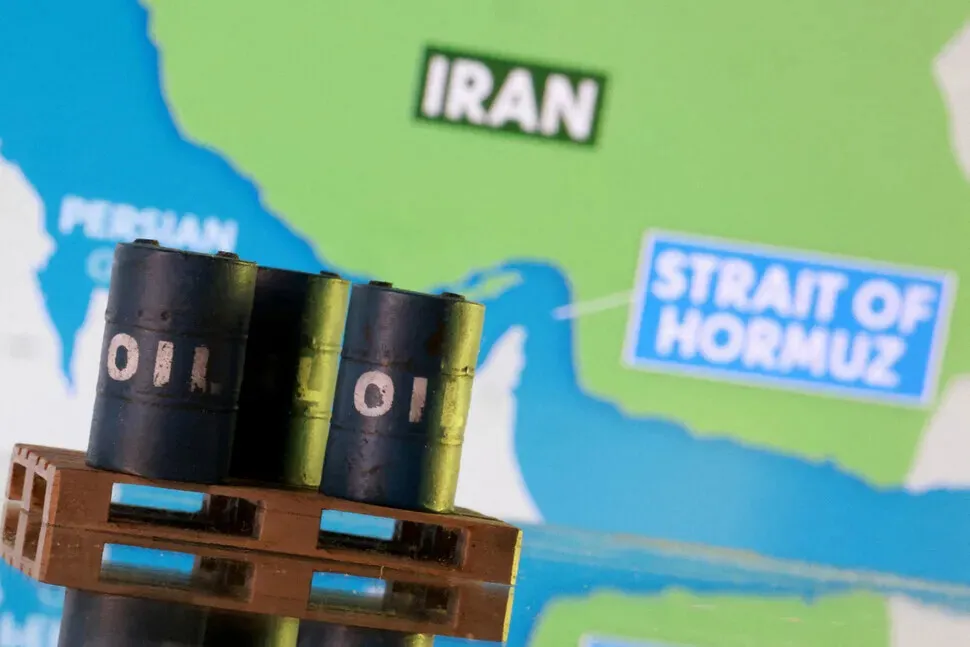
Continued geopolitical instability since the start of the war in Iran and growing volatility in oil prices is sending ever-widening shockwaves through South Korea’s economy and industry.
Because South Korea does not engage in much direct trade with the Middle East, some observers say the immediate effects will be minimal. But if the conflict becomes protracted, difficulty importing raw materials and a shaky exchange rate could do significant damage to Korea’s economy.
According to industry insiders who spoke to the Hankyoreh on Tuesday, there is growing concern among Korean automakers — eager to make up for a loss in earnings following the Trump administration’s steep tariffs — that the war could weaken demand in the Middle East, which they had been cultivating as an alternative market.
The Hyundai Motor Group, which sold 385,000 units in the Middle East in 2023, increased sales to 414,000 last year, boosting earnings by 7.5% in just two years.
As part of its strategy in the Middle Eastern market, the Hyundai Motor Group was building its Hyundai Motor Manufacturing Middle East (HMMME) plant in Saudi Arabia’s King Salman Automotive Cluster. When completed, it is expected to produce an annual 50,000 electric vehicles and internal-combustion engine vehicles simultaneously. The objective was to finish construction and have the plant up and running by the fourth quarter of 2026.
The plant was set to operate according to the “completely knocked down” method, a manufacturing strategy involving the disassembly of products into individual parts that are then shipped to a target market, where they’re reassembled into the complete product. The parts would be shipped in from South Korea and elsewhere. However, the blockade of the Strait of Hormuz by Iran has now made it difficult to send parts to the plant.
“It’s unclear whether Hyundai will be able to begin operations of its Saudi production subsidiary before the end of the year, giving it no choice but to rethink the Middle East market strategy as a whole,” an industry insider told the Hankyoreh.
The unrest in the Middle East has dealt a direct hit to Korea’s petrochemical industry, which was already undergoing restructuring due to a supply glut from China and worsening business conditions.
South Korean petrochemical firm Yeochun NCC has invoked force majeure as its deliveries of naphtha, produced by distilling petroleum, to clients have been delayed due to the situation in the Strait of Hormuz.
While the country has around 208 days’ worth of crude oil combined in both public and private reserves, naphtha is held only by individual companies, which keep just one to two months of inventory.
In the case of a protracted crisis in the Middle East, supplies of ethylene, the bread and butter of the industry, could be severely curtailed or even cut off. This would cause a chain reaction that would prevent the production of rubber, plastic, textiles and other products that utilize naptha.
Aviation and the maritime transport industry are also highly impacted by oil prices and fluctuations in the foreign exchange rate. Normally, fuel comprises around 20% to 30% of operating costs for domestic airlines.
“Fuel for aircraft is normally purchased in dollars, so high oil prices can snowball with a high exchange rate,” an industry insider said.
Rises in international oil prices could lead to an overall slump in demand for travel.
The semiconductor industry, which has benefited from the AI boom, is also tense about supply chain hiccups originating in the Middle East. Helium is a critical element for wafer cooling, an important process in semiconductor manufacturing. The country’s chip industry relies on imports of helium, 64.7% of which come from Qatar. A whopping 97.5% of imports of bromine, used in the wafer etching process, come from Israel.
The Ministry of Trade, Industry and Resources is evaluating the supply situation of 14 product categories, including bromine, helium, and various metrology tools (high-precision instruments necessary for inspecting and verifying the properties of chips and wafers). The ministry is exploring measures to diversify relevant supply chains if the Middle East situation stretches into the long term.
There are concerns about reductions in demand for Korean household appliances, which are popular in the Middle East.
“Samsung is the No. 1 brand for TVs and other home appliances in Saudi Arabia, and LG Electronics has also been targeting Saudi Arabia as its entryway into emerging markets in the Middle East and Africa,” an industry insider said. “If geopolitical uncertainty continues into the long term, they will inevitably be hurt.”
By Lee Jae-ho, staff reporter; Yu Ha-young, staff reporter; Kwon Hyo-jung, staff reporter; Seo Hye-mi, staff reporter
Please direct questions or comments to [english@hani.co.kr]

Editorial・opinion
![[Editorial] PPP leader puts party over country by driving wedge in US alliance](https://flexible.img.hani.co.kr/flexible/normal/500/300/imgdb/original/2026/0512/7217785750956023.jpg "[Editorial] PPP leader puts party over country by driving wedge in US alliance") [Editorial] PPP leader puts party over country by driving wedge in US alliance
[Editorial] PPP leader puts party over country by driving wedge in US alliance![[Column] Russia and North Korea: An alliance of desperation](https://flexible.img.hani.co.kr/flexible/normal/500/300/imgdb/original/2026/0511/5717784883680777.jpg "[Column] Russia and North Korea: An alliance of desperation") [Column] Russia and North Korea: An alliance of desperation
[Column] Russia and North Korea: An alliance of desperation- [Column] Is North Korea’s ‘two states’ doctrine really a response to Hallyu’s influence?
- [Column] The Korean government has a duty to overseas adoptees
- [Reporter’s notebook] Korea’s chipmakers are partying, but not everyone’s invited
- [Column] You are not my ‘oppa’
- [Editorial] Should Korea’s chipmakers share their bounty with society?
- [Editorial] North Korea’s rejection of unification doesn’t rule out coexistence
- [Editorial] Coupang’s Kim must respect Korean law to earn Koreans’ trust
- [Editorial] USFK commander’s ‘kill web’ idea is dangerous and unworkable
Most viewed articles
- 1[Column] Is North Korea’s ‘two states’ doctrine really a response to Hallyu’s influence?
- 2[Breaking] Appeals court ups ex-interior minister’s sentence to 9 years for role in insurrection
- 3[News analysis] Strike on ship deepens Korea's dilemma as identifying attacker could add to pressure to respond
- 410 years after Gangnam Station murder, feminists reflect on work still left to be done
- 5Korean high school students demand safety measures after peer is killed walking home in Gwangju
- 6Researchers in Antarctica endured month with crew member who pulled weapon on coworker
- 7[Column] Russia and North Korea: An alliance of desperation
- 8Defense chiefs of US, Korea discuss OPCON, alliance modernization
- 9PPP leader under fire for fearmongering anti-Lee op-ed in US outlet
- 10[News analysis] Why Korea is condemning the attack on its ship, but not naming the attacker