hankyoreh
Links to other country sites 다른 나라 사이트 링크
1 in 20 people in Korea comes from migrant background, figures show
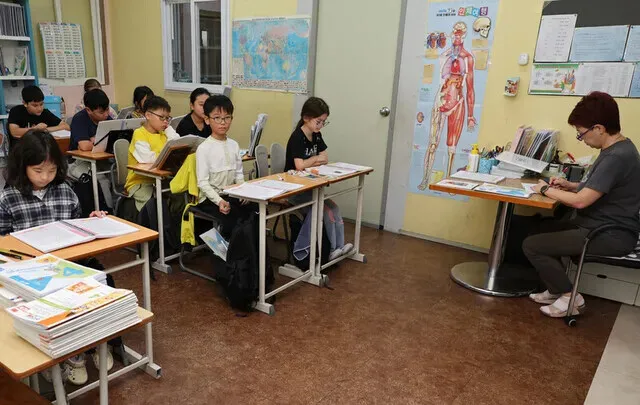
One in every 20 people in Korea has a migrant background, new government figures show.
According to 2024 statistics released Monday by Korea’s Ministry of Data and Statistics, Korea’s migrant-background population — limited to those residing in Korea for at least three months as of Nov. 1, 2024 — numbered 2.72 million, up 134,000 (5.2%) from a year earlier.
The migrant background population accounts for 5.2% of Korea’s total population of 51,806,000, increasing 0.3 points from the previous year.
People with a migrant background are defined as migrants and Koreans with at least one migrant parent. More specifically, that includes foreign nationals and Korean citizens who have naturalized, who have been recognized as citizens by the government, or who are second-generation immigrants.
The Ministry of Data and Statistics is publishing these figures for the first time this month, drawing upon 26 kinds of administrative data (including the resident registry, the alien registry and the building registry) sourced from 13 agencies and 400 universities.
Foreign nationals make up the biggest share of the migrant-background population at 2.04 million people (75.2%). That subcategory rose by 108,000 (5.6%) from the previous year.
Korean nationals with a migration background totaled 672,000 (24.8%), up 27,000 (4.1%), from a year earlier. That includes second-generation immigrants (381,000, 14% percent), naturalized and officially recognized citizens (245,000, 9%) and others (46,000, 1.7%).
More than half of those with a migration background (1.54 million, 56.8%) live in the greater Seoul area.
By administrative area, Gyeonggi Province was home to the largest number (887,000 people, 32.7%), followed by Seoul (475,000, 17.5%), Incheon (180,000, 6.6%), South Chungcheong Province (176,000, 6.5%) and South Gyeongsang Province (168,000, 6.2%).
Within Gyeonggi, the city of Ansan was home to the most people of migrant backgrounds (113,000, 4.2%), followed by the city of Hwaseong (85,000, 3.15), and Siheung (81,000, 3%). People of migrant backgrounds account for more than 10% of the overall population in 17 cities and counties around the country, including Yeongam County in South Jeolla Province (21.1%), Eumseong County in North Chungcheong Province (19.9%), and Ansan in Gyeonggi Province (16.1%).
The number of people of migrant backgrounds under the age of 24 came to 738,000, up 7.9% from last year (54,000). Of them, foreign nationals accounted for 50.3% (372,000) and second-generation immigrants for 44.9% (332,000), making up a combined 95.3% of the under-24 population of people with migrant backgrounds.
As for the current or former nationality of these young people or their parents, 27.2% said Vietnamese (201,000), followed by Chinese (16.5%, 122,000) and ethnically Korean Chinese (12%, 88,000).
By Kim Yoon-ju, staff reporter
Please direct questions or comments to [english@hani.co.kr]

Editorial・opinion
![[Editorial] Korea must rally nations to unite against Trump’s bullying](https://flexible.img.hani.co.kr/flexible/normal/500/300/imgdb/original/2026/0318/5317738209168584.jpg "[Editorial] Korea must rally nations to unite against Trump’s bullying") [Editorial] Korea must rally nations to unite against Trump’s bullying
[Editorial] Korea must rally nations to unite against Trump’s bullying![[Editorial] Korea must say no to sending soldiers into Trump’s war](https://flexible.img.hani.co.kr/flexible/normal/500/300/imgdb/original/2026/0317/9417737388477196.jpg "[Editorial] Korea must say no to sending soldiers into Trump’s war") [Editorial] Korea must say no to sending soldiers into Trump’s war
[Editorial] Korea must say no to sending soldiers into Trump’s war- [Column] What do norms mean in times of war?
- [Column] The megalomanic dictator with tariffs in one hand, missiles in the other
- [Editorial] Korea can’t let US trade probes strong-arm it into concessions
- [Editorial] Trump’s baseless claim that Iran bombed girls’ school crosses line
- [Correspondent’s column] JD Vance’s 67-hour disappearance
- [Column] Withstanding Trump’s predatory hegemony
- [Editorial] US dragging Kurds into its war with Iran would be a disaster
- [Column] US allies in the Gulf are in flames. Can Korea avoid a similar fate?
Most viewed articles
- 1Former bodyguard’s dark tale of marriage to Samsung royalty
- 2‘Golden’ acceptance speech interruption draws criticism over ‘disrespect’ at Oscars
- 3Trump inflates USFK numbers, pressures Seoul to ‘defend’ US in Strait of Hormuz
- 4Trump’s miscalculation in Iran derails plan for highly anticipated summit with Xi
- 5[Editorial] Korea must rally nations to unite against Trump’s bullying
- 6Trump adviser causes stir by suggesting Israel might nuke Iran
- 7Will US shifting THAAD to Mideast really leave a hole in South Korea’s air defenses?
- 8Return of the kings: BTS comeback turns Seoul thoroughfare into a stage
- 9BTS taps into history of ‘Arirang’ in teaser for new album
- 10Ejae’s Oscar dress inspired by Korean Empire’s ceremonial court attire