hankyoreh
Links to other country sites 다른 나라 사이트 링크
Taking Gwangju’s story of democracy global, starting in Australia
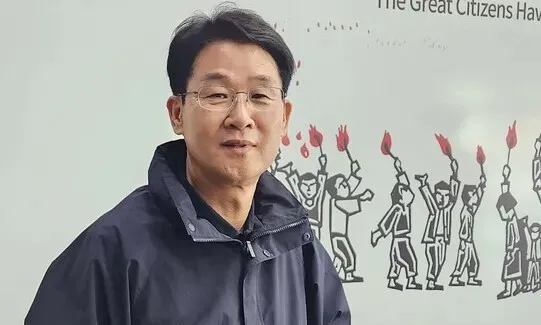
A Korean Australian who lived through the May 18 Gwangju Democratization Movement of 1980 is pushing for greater global awareness of the uprising and massacre.
“Without even telling me beforehand, my oldest daughter, who was born in Australia, visited the May 18 National Cemetery last year while traveling in Korea with friends,” said Ryu Shik, 61, a member of the steering committee of the Korean Society of Sydney NSW Australia.
“Global awareness of the incident has risen following author Han Kang’s winning of the Nobel Prize in Literature. Now’s the time to cement it as the key historical event in Korea’s democracy and take its story to the world,” he said, adding that commemorative events should go beyond being centered in Gwangju to widely promote the pro-democracy movement in 1980 abroad.
After immigrating to Australia in 1995, Ryu became an active member of the local Korean Society and leads a ceremony to mark the uprising every year. The Hankyoreh sat down with Ryu on April 24 at the May 18 Foundation in Gwangju.
Behind Ryu’s efforts to raise awareness of May 18 from a distant land is a tragic family history. As a first-year student at Gwangju Inseong High School, he attended protests with his youngest uncle, Ryu Young-sun (then 27), around the former building of the South Jeolla Provincial Office and Geumnam-ro, a famous thoroughfare in the city.
His eldest sister, So-young, then 21 and the only university student among Ryu’s brother and two sisters, was taken into preventive custody from the family home in the city’s Sansu neighborhood on the night of May 17, 1980, on the charge of illegal assembly. Ryu’s uncle left the house to look for his niece.
During mass shootings by martial law troops on May 21 in front of the provincial office building, Ryu saw the deaths of a young man waving the Korean flag from atop an armored vehicle and a student in a military training uniform standing next to him, but his anger outweighed his fear.
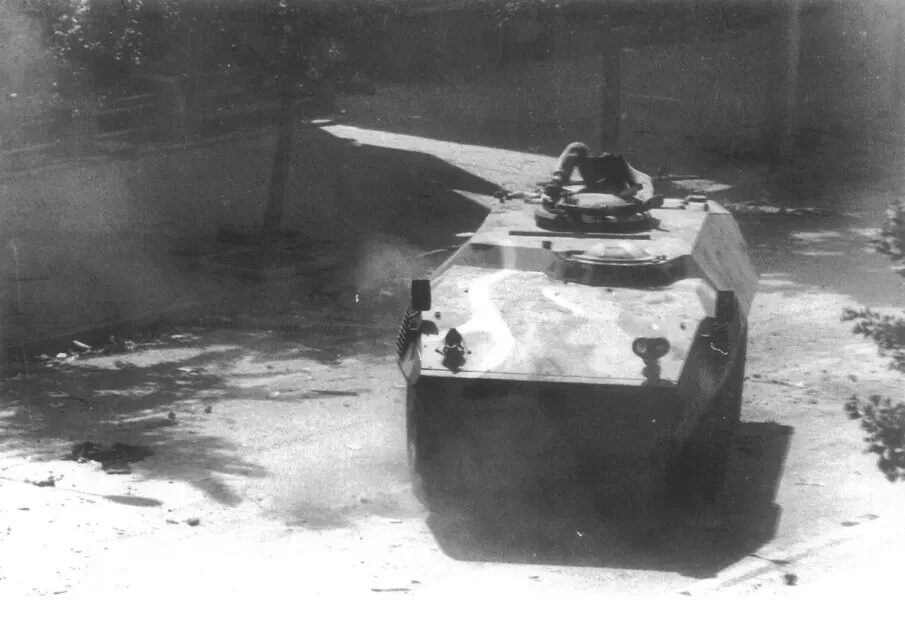
In the wee hours of May 27, his mother forbade him to leave the house. Yet he saw lights from a helicopter flying in a straight line toward a building, later learning that they were tracer rounds (light-emitting bullets to indicate a target during night firing). His uncle died at the provincial office building that night.
The following year, Ryu took action. That action came in the form of what later became known as the “Sons Incident” — the first collective act of its kind in Gwangju since the uprising and massacre.
“Sons” (adeul) was a discussion forum launched in 1976 by about 20 high school students, led by Jeong Cheol, who later adopted the Buddhist name Jeong Ui-haeng, a third-year student at Gwangju Jeil High School. The group’s name reflects the meaning of “pursuit of the truth as sons of the nation.”
Jeong, Cho Bong-hun and others who frequently gathered at Ryu’s house agreed that something had to be done. From September 1980 to May the following year, they distributed thousands of leaflets exposing the true story of the massacre throughout the city. Ryu also participated by running errands.
As the youngest member of Sons, Ryu was pursued by police and eventually faced arrest.
“I remember back in mid-June 1981, I was in a classroom when they called me to the principal’s office over the public announcement system,” he said. “I went there and saw two police officers. They just handcuffed me and took me to the Gwangju Seobu Police Station. My bag was full of leaflets, so I had no way out.”
Ryu said the police brutally beat him and the other detainees, calling it a memory he would rather forget.
On the charges of violating laws on assembly and demonstration, martial law and national security, Jeong, Cho and Lee Han-su were each sentenced to a year and six months in prison; Lee Sang-jin, Cho Hyun-jong, Chung Byung-kyu, Chung Sam-su and Chung Seok-yun got a year with a two-year suspension; and Ryu and Park Jung-yul received eight months with a two-year suspension.
With his conviction compounding his parents’ history of partisan activism, Ryu could not find a job. In 1995, he decided to immigrate with his wife to Australia for a fresh start.
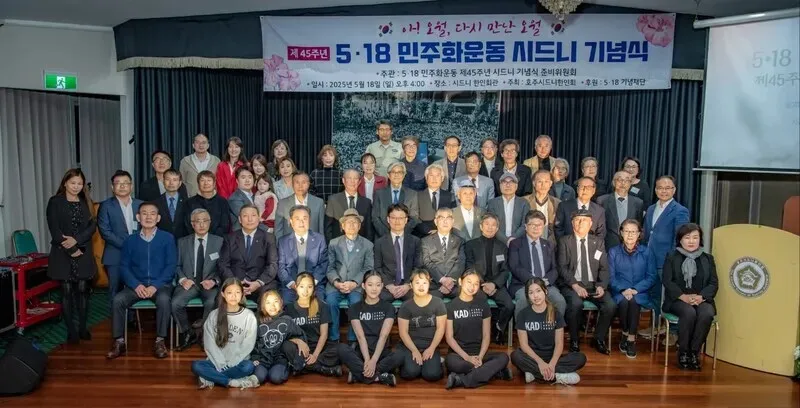
But memories of his homeland and the events in Gwangju never left his mind. While active in the Korean Society of Sydney, he started to speak out about the uprising. Among conservative voices in the association, he said, many believed that the North Korean military was responsible for what happened.
Fortunately, Ryu said, views on Gwangju began to change within the association after President Moon Jae-in took office in 2017. In Sydney, the progressive group Korea Resource Centre has since 1985 held small memorial services for the uprising, but following Ryu’s suggestion, it formed a joint preparatory committee in 2019 with the Korean Society of Sydney to host an annual ceremony for the incident.
“Korea has organizations related to May 18, but the lack of such organizations abroad means nobody can correct misconceptions about the incident,” Ryu said. “To truly globalize May 18, we must set up a related global headquarters and branches in cooperation with Korean associations around the world.”
By Kim Yong-hee, Gwangju correspondent
Please direct questions or comments to [english@hani.co.kr]

Editorial・opinion
![[Correspondent’s column] The new generation of ‘sewer socialists’ are in it to win it](https://flexible.img.hani.co.kr/flexible/normal/500/300/imgdb/original/2026/0626/8217824618600972.jpg "[Correspondent’s column] The new generation of ‘sewer socialists’ are in it to win it") [Correspondent’s column] The new generation of ‘sewer socialists’ are in it to win it
[Correspondent’s column] The new generation of ‘sewer socialists’ are in it to win it![[Editorial] Who benefits from tug-of-war over jurisdiction in the DMZ?](https://flexible.img.hani.co.kr/flexible/normal/500/300/imgdb/original/2026/0625/4817823767123335.jpg "[Editorial] Who benefits from tug-of-war over jurisdiction in the DMZ?") [Editorial] Who benefits from tug-of-war over jurisdiction in the DMZ?
[Editorial] Who benefits from tug-of-war over jurisdiction in the DMZ?- [Column] Inequality in Korea hits high not seen since colonial era
- [Editorial] Unity doesn’t mean embracing defenders of insurrection
- [Editorial] Stiff sentence for ex-justice minister shows abetting insurrection won’t go unpunished
- [Column] Bridging the gap between pragmatic policies of North, South Korea
- The second China shock is here — and it’s bigger, broader and more global
- [Column] America declares its retreat from the Middle East
- [Column] North Korea’s economic boom
- [Editorial] Trump’s defeat in Iran raises stakes for Korea
Most viewed articles
- 1UN Command pulls rank, contradicts Seoul on possible violation of armistice by North in DMZ
- 2[Column] Inequality in Korea hits high not seen since colonial era
- 3[Editorial] Unity doesn’t mean embracing defenders of insurrection
- 4[Exclusive] US Congress calls for review of CCP’s ‘malign influence’ in South Korea
- 5[World Cup] Frustrating defeat to South Africa leaves Korea’s fate up in the air
- 6The AI boom is making Taiwan rich. So why do its people feel poor?
- 7The future of work and learning in the AI era depends on human choices
- 8Shincheonji leader detained for alleged plot to have followers join PPP in droves
- 9[Editorial] Who benefits from tug-of-war over jurisdiction in the DMZ?
- 10Korean firms join forces with Nvidia for massive AI infrastructure build-out