hankyoreh
Links to other country sites 다른 나라 사이트 링크
[Interview] Is war in Iran the beginning of the end for nuclear nonproliferation?

US President Donald Trump’s war against Iran may be more than a diplomatic blunder, an expert in security studies warns — it may mark the beginning of the end for the world’s nuclear nonproliferation regime.
Jim Walsh, a senior research associate at the Security Studies Program at the Massachusetts Institute of Technology, told the Hankyoreh in a video interview on Saturday that while US bombs can destroy buildings, they cannot destroy the knowledge about nuclear weapon manufacture in the heads of Iranian scientists.
Walsh added that far from breaking Iran’s resolve to develop nuclear weapons, the war would probably only stiffen that resolve while also clearly signaling to North Korea that it cannot trust the US.
Walsh is one of only a handful of Americans to have personally visited Iran and North Korea to discuss the nuclear issue with officials in those countries.
Walsh asserted that the bombing campaign is not grounded in a policy rationale. Trump, he said, is “making judgments based on emotion and often on misinformation.” In other words, he said, the bombing is little more than an expression of his anger with Iran.
Walsh also described Trump’s demand for Iran’s “unconditional surrender” as “the worst thing you can do tactically.”
“Normally, you’re creating off-ramps so your adversary can find a way out of the crisis and still save face,” Walsh noted.
“When you say ‘unconditional surrender’ to Iran, of all countries — to Iran, the proud Persian country that is a minority in its own neighborhood — that’s just going to make them fight harder.”
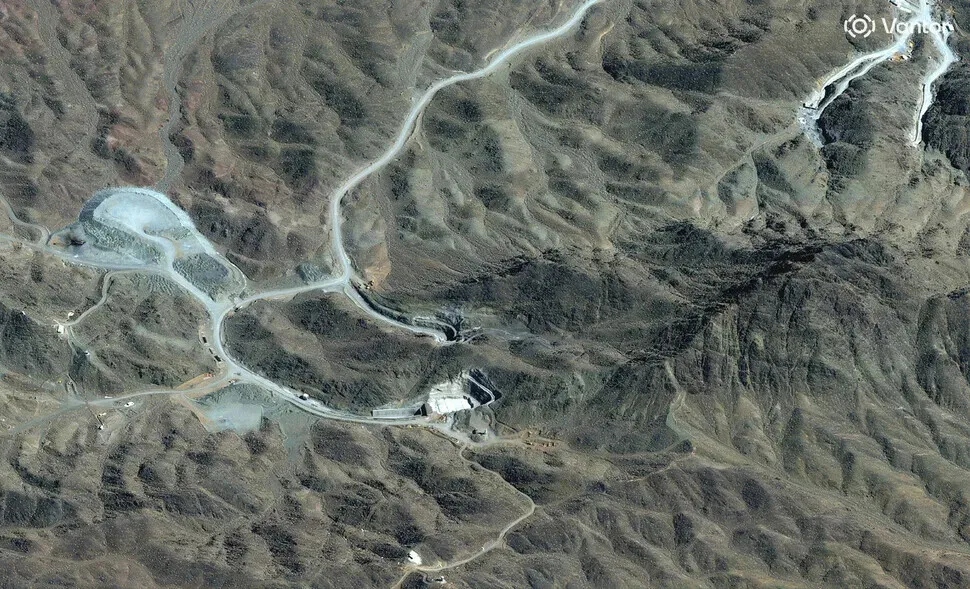
Walsh said that Trump would never have made such comments publicly if his decision had been based on a logically consistent policy. Rather, this disaster is the result of Trump’s personality preferences.
The MIT analyst was also skeptical about the bombing campaign’s efficacy.
Walsh warned that Iran’s nuclear program cannot be bombed out of existence because “it makes it more likely that [Iran] will want to build the bomb.”
While acknowledging that the campaign may have physically destroyed some nuclear facilities inside Iran, Walsh emphasized that such destruction doesn’t mean the elimination of Iran’s nuclear capabilities.
“You’ve killed some people, you’ve destroyed some buildings and some sensitive technologies. The question is, can they reconstitute that?” he asked.
“You haven’t bombed the knowledge of how to build a centrifuge out of their heads. You haven’t killed the entire workforce, and they’ve been doing this for 20 years. They’ve built tens of thousands of centrifuges.”
Considering that Iran could easily have foreseen and prepared for the American attack, Walsh said there’s a good chance Iran will quickly rebuild its nuclear program.
“The Iranians are not stupid,” Walsh said, pointing out that you “wouldn’t keep [centrifuges] in a way that they were susceptible to bombing if you were expecting to be bombed. So what you do is you break [them] into parts and assemble them later.”
Walsh pointed out that if Iran had hidden its centrifuges throughout its vast territory, finding and bombing each of those locations would be impossible.
“The big question here is, when they bombed Fordo, was that 60% enriched uranium there, and is it now buried in the rubble? If they’re able to retrieve it from Fordo or if it’s someplace else, it won’t take them very long to enrich 60% to 90%,” Walsh said.

Walsh expressed his concerns that the current war’s ramifications will go beyond Iran. If these trends continue, he said, Trump’s second term will go down as the beginning of a crisis in the nonproliferation regime.
In regard to North Korea, Walsh said the US’ attack on Iran “makes them less open to denuclearization.”
In his view, seeing Iran attacked for merely trying to maintain nuclear latency will make North Korea distrust the US even more and reinforce its determination to never give up its nuclear weapons.
Walsh furthermore voiced skepticism about the assumption that regime change in Iran will necessarily stop its nuclear weapon development.
“It’s not just the Islamic Republic of Iran that wanted nuclear weapons in the past. The Shah had a weapons program,” Walsh observed. “Changing the personality on top doesn’t necessarily change the strategic landscape.”
“If Israel insists on bombing them all the time, then they are going to want to defend themselves.”
By Kim Won-chul, Washington correspondent
Please direct questions or comments to [english@hani.co.kr]

Editorial・opinion
![[Editorial] Trump’s baseless claim that Iran bombed girls’ school crosses line](https://flexible.img.hani.co.kr/flexible/normal/500/300/imgdb/original/2026/0309/4217730446901883.jpg "[Editorial] Trump’s baseless claim that Iran bombed girls’ school crosses line") [Editorial] Trump’s baseless claim that Iran bombed girls’ school crosses line
[Editorial] Trump’s baseless claim that Iran bombed girls’ school crosses line![[Correspondent’s column] JD Vance’s 67-hour disappearance](https://flexible.img.hani.co.kr/flexible/normal/500/300/imgdb/original/2026/0306/2517727866984907.jpg "[Correspondent’s column] JD Vance’s 67-hour disappearance") [Correspondent’s column] JD Vance’s 67-hour disappearance
[Correspondent’s column] JD Vance’s 67-hour disappearance- [Column] Withstanding Trump’s predatory hegemony
- [Editorial] US dragging Kurds into its war with Iran would be a disaster
- [Column] US allies in the Gulf are in flames. Can Korea avoid a similar fate?
- [Editorial] North Korea’s tough talk mustn’t deter Seoul’s efforts to rebuild trust
- [Editorial] Attack on Iranian girls’ school is an indefensible crime against humanity
- [Editorial] Trump’s unjustified war with Iran threatens chaos for us all
- [Column] What a Korean man’s foiled plan to seek assisted death in Switzerland reveals
- [Column] This is what accountability looks like
Most viewed articles
- 1Korea named as target of new Section 301 probe by US
- 2‘Made in USA’: Scraps of missile that killed Iranian children point to US responsibility
- 3[Editorial] No greater sign that South Korea must prioritize building its own defense abilities
- 4US may seek exit from Iran war by moving the goalposts of victory
- 5US Democrats say Trump’s investment pressure has ‘deeply unsettled’ alliance with Seoul
- 6[Column] Misconceptions about America’s war with Iran
- 765% of Korean men say gender equality has gone ‘far enough’; only 42% of women agree
- 8How much is the US willing to risk for the Strait of Hormuz?
- 9Coupang investors insinuate that US is planning Section 301 probe into Korea
- 10[News analysis] Air defense pullout signals new era of US strategic flexibility in Korea