hankyoreh
Links to other country sites 다른 나라 사이트 링크
[Editorial] Coupang’s attempt to hide behind US won’t win back Korean consumers
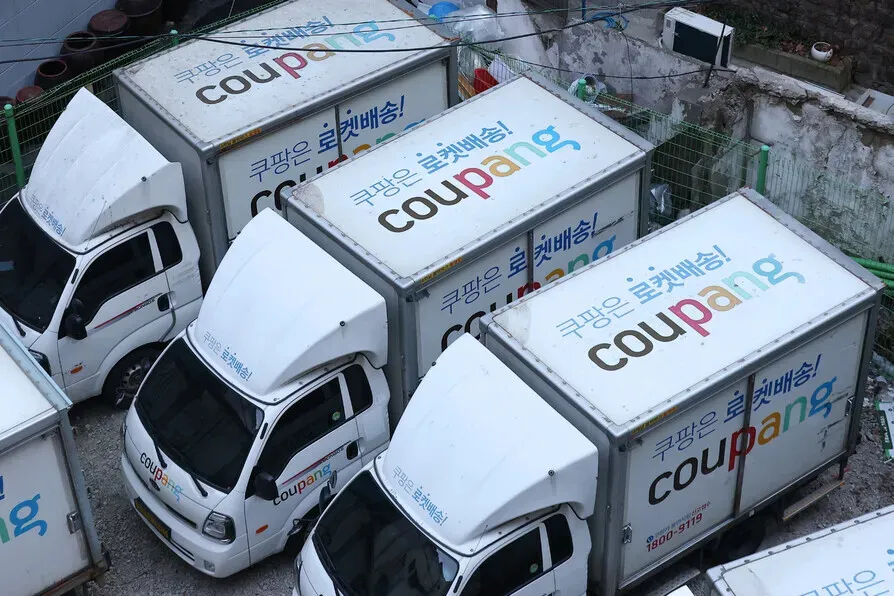
In its response to efforts by the South Korean government and lawmakers to clarify who is responsible for the recent data breach at Coupang, the e-commerce giant seems poised to frame this issue as a trade dispute between Korea and the US. Coupang must understand that attempting to leverage the power of the US government to escape this crisis will only provoke greater public anger and backlash.
On Tuesday, Robert O’Brien, who served as the national security adviser during President Donald Trump’s first administration, wrote on the social media platform X, “[Trump] has worked hard to rebalance the trade relationship with Korea & it would be very unfortunate if Korea undermines his efforts by targeting US tech firms.”
He argued that “a strong, coordinated US response is essential to safeguard fair treatment of US companies,” urging the US government to respond to what he called the National Assembly’s “aggressive targeting of Coupang [that] will set the stage for further KFTC discriminatory measures,” referring to the Korea Fair Trade Commission.
Republican Rep. Darrell Issa also expressed similar views. In an opinion piece published in the Daily Caller, a right-wing media outlet, Issa asserted that the recent Coupang debacle is an example of the South Korean government discriminating against and attacking American companies.
Coupang’s lobbying efforts in political and government circles likely played a role in such denouncements.
Coupang has spent approximately US$11 million over the past five years on lobbying activities targeting the US White House, National Security Council, Department of Commerce, and Congress. This is not the first time Coupang has skirted a crisis by framing controversies as a trade issue. The same strategy was taken last year, when the Fair Trade Commission exempted its chairman, Bom Kim, from being designated as the “controlling shareholder.”
American pundits defending Coupang and Bom Kim — who is known as Kim Bom-suk in Korea — may wonder why the Korean government and National Assembly are intervening and applying pressure across the board regarding corporate management. However, in the US, when similar incidents occurred, the US Congress held hearings where the de facto top decision-makers of Big Tech companies appeared to testify. One cannot help but ask why the Korean National Assembly is deemed incapable of summoning Kim for hearings to demand accountability.
Moreover, this incident erupted in the context of several issues that have been accumulating at Coupang, including poor working conditions for laborers and unfair dealings with vendors. The public can no longer tolerate such violations. It is entirely natural for the National Assembly and government to step in on such matters of national concern.
Coupang is only making matters worse by primarily attempting to evade crisis through lawsuits and lobbying. If it tries to cover up the situation again by leveraging the sway of the US government, it will deal an even greater blow to consumer trust, which is already at a low. The National Assembly and the government must respond sternly to Coupang’s arrogance.
Please direct questions or comments to [english@hani.co.kr]

Editorial・opinion
![[Editorial] Trump’s baseless claim that Iran bombed girls’ school crosses line](https://flexible.img.hani.co.kr/flexible/normal/500/300/imgdb/original/2026/0309/4217730446901883.jpg "[Editorial] Trump’s baseless claim that Iran bombed girls’ school crosses line") [Editorial] Trump’s baseless claim that Iran bombed girls’ school crosses line
[Editorial] Trump’s baseless claim that Iran bombed girls’ school crosses line![[Correspondent’s column] JD Vance’s 67-hour disappearance](https://flexible.img.hani.co.kr/flexible/normal/500/300/imgdb/original/2026/0306/2517727866984907.jpg "[Correspondent’s column] JD Vance’s 67-hour disappearance") [Correspondent’s column] JD Vance’s 67-hour disappearance
[Correspondent’s column] JD Vance’s 67-hour disappearance- [Column] Withstanding Trump’s predatory hegemony
- [Editorial] US dragging Kurds into its war with Iran would be a disaster
- [Column] US allies in the Gulf are in flames. Can Korea avoid a similar fate?
- [Editorial] North Korea’s tough talk mustn’t deter Seoul’s efforts to rebuild trust
- [Editorial] Attack on Iranian girls’ school is an indefensible crime against humanity
- [Editorial] Trump’s unjustified war with Iran threatens chaos for us all
- [Column] What a Korean man’s foiled plan to seek assisted death in Switzerland reveals
- [Column] This is what accountability looks like
Most viewed articles
- 1Korea named as target of new Section 301 probe by US
- 2‘Made in USA’: Scraps of missile that killed Iranian children point to US responsibility
- 3[Editorial] No greater sign that South Korea must prioritize building its own defense abilities
- 4US may seek exit from Iran war by moving the goalposts of victory
- 5US Democrats say Trump’s investment pressure has ‘deeply unsettled’ alliance with Seoul
- 6[Column] Misconceptions about America’s war with Iran
- 765% of Korean men say gender equality has gone ‘far enough’; only 42% of women agree
- 8How much is the US willing to risk for the Strait of Hormuz?
- 9Coupang investors insinuate that US is planning Section 301 probe into Korea
- 10[News analysis] Air defense pullout signals new era of US strategic flexibility in Korea