hankyoreh
Links to other country sites 다른 나라 사이트 링크
[Editorial] Korea must stand its ground on ‘commercial rationality,’ currency swap
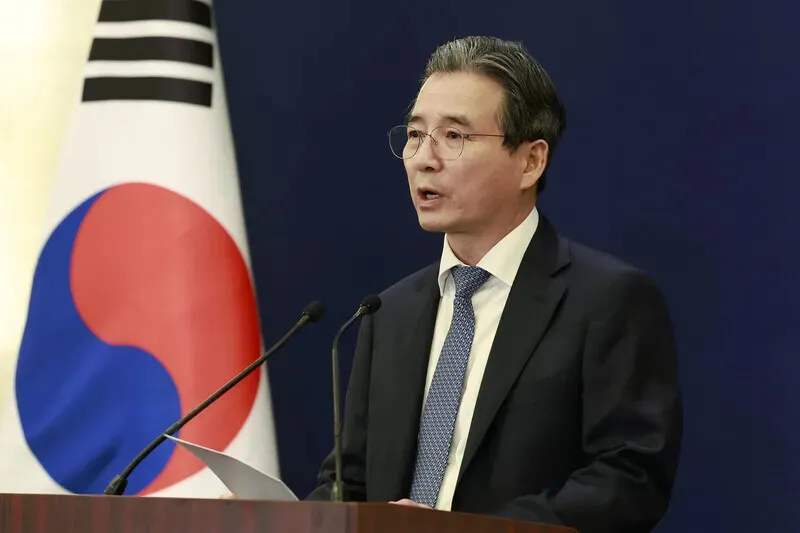
While visiting the US to speak before the UN General Assembly, Korean President Lee Jae Myung reportedly told US Treasury Secretary Scott Bessent in a meeting on Wednesday that he hopes the two countries’ deliberations about Korea’s proposed investment package in the US will be grounded in “commercial rationality” and serve both sides’ interests. Lee also apparently emphasized the need for an “unlimited” currency swap between the two countries.
The US currently wants Korea to invest US$350 billion in the US before the end of Donald Trump’s second term (Jan. 19, 2029) in exchange for the US lowering sectoral tariffs on automobiles. In addition, the US wants that investment to take the form of equity purchases, which would require cash.
But it’s essentially impossible for Korea to raise that amount of dollars in the domestic forex market. As Lee himself has warned, any such attempt could land Korea in a financial crisis. A currency swap is the minimum safety mechanism required to head off such a contingency.
A currency swap is a “necessary condition,” as Lee’s chief policy secretary Kim Yong-beom put it on Thursday. But even if granted by the US, a swap would not be sufficient for resolving this issue.
Big questions remain about the gargantuan sum of US$350 billion: namely, who is going to raise it, and how they are supposed to pull that off.
One option that Seoul is apparently considering is having the Export-Import Bank of Korea (Exim Bank) issue bonds or take out loans backed by the government. A government guarantee would need the consent of the National Assembly.
But it’s doubtful that the Exim Bank could raise so much money from the market without grave repercussions. Furthermore, if the US investments have poor returns or even lose money, those losses would have to be borne by the Exim Bank — and ultimately, by the Korean government, as the guarantor of the loans.
The US government presumably wants to decide how the Korean funds are invested and to split profits evenly until the investment is recouped, at which point it would keep 90% of any subsequent profits, leaving just 10% for Korea. It’s unclear whether the National Assembly would ever agree to such a lopsided investment plan.
These issues appear to be what Lee was addressing when he spoke of “commercial rationality.”
In the end, “commercial rationality” and the currency swap are the bare minimum conditions that Korea must insist upon.
Korean negotiators need to maximize loans and guarantees relative to equity purchase, require that Korean preferences be reflected in investment decisions, and ensure that investment returns are fairly distributed.
If Korea’s tariff talks remain deadlocked while Japan and the EU have already negotiated for the US to lower tariffs on their automobiles to 15%, Korean automakers will continue to suffer. But neither should we get in such a hurry that we consent to a deal that would badly damage our national interest.
The government needs to take a firm, principled stance in the negotiations.
Please direct questions or comments to [english@hani.co.kr]

Editorial・opinion
![[Column] Coupang’s play in Washington](https://flexible.img.hani.co.kr/flexible/normal/500/300/imgdb/original/2026/0227/7817721808892682.jpg "[Column] Coupang’s play in Washington") [Column] Coupang’s play in Washington
[Column] Coupang’s play in Washington![[Editorial] Clarification and accountability needed on USFK standoff with Chinese jets](https://flexible.img.hani.co.kr/flexible/normal/500/300/imgdb/original/2026/0226/4817720940359806.jpg "[Editorial] Clarification and accountability needed on USFK standoff with Chinese jets") [Editorial] Clarification and accountability needed on USFK standoff with Chinese jets
[Editorial] Clarification and accountability needed on USFK standoff with Chinese jets- [Editorial] USFK’s provocation of China demands more than perfunctory protest by Seoul
- [Editorial] PPP’s refusal to cut ties with Yoon will be its undoing
- [Editorial] Korea is no staging ground for US operations against China
- [Editorial] Court convicts Yoon, but fails to fully reckon with his attempted coup
- [Editorial] Just because Japan is rushing US investments doesn’t mean Korea should
- [Column] Moment of truth: What the Epstein files really show us
- [Editorial] Coupang’s lobbying in US won’t win back Korean customer base
- [Column] Today’s diverging paths of human virtue, hegemony and tyranny
Most viewed articles
- 1Real-life heroes of “A Taxi Driver” pass away without having reunited
- 2Threatening North Korea has not made peninsula any safer, says South Korea’s Lee
- 3Russian Embassy in Seoul ignores host nation’s request to remove pro-war banner
- 4[News analysis] Behind split strategies, Kim Jong-un stays focused on regime security, advancement
- 5Former bodyguard’s dark tale of marriage to Samsung royalty
- 6Trump open to talking with Kim Jong-un ‘without any preconditions,’ says White House
- 7[NBS] Korea’s Lee logs 67% approval rating, his highest since taking office
- 8Hard labor an increasing punishment for poor people unable to pay fines
- 9Rosé’s ‘APT.’ was best-selling single of 2025, a first for singer not from North America or Europe
- 10[Editorial] USFK’s provocation of China demands more than perfunctory protest by Seoul