hankyoreh
Links to other country sites 다른 나라 사이트 링크
[Editorial] Korea must prepare for fallout of Trump upending free trade order
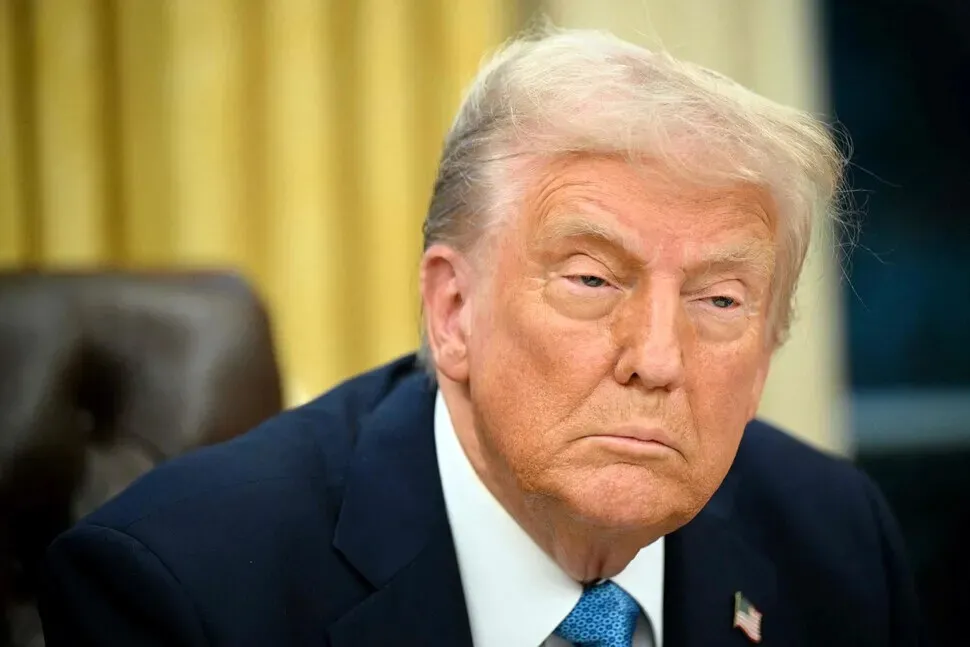
The nightmare that everyone had dreaded is now becoming a reality. On Saturday, US President Donald Trump announced that in three days, he planned to begin imposing heavy tariffs of 25% on nearly all imports from Mexico and Canada (10% in the case of Canadian energy), with additional tariffs of 10% on Chinese imports.
Now that Trump has made it clear he plans to use tariffs as a weapon to maximize US profits as part of his “Make America Great Again” vision, severe trade frictions appear to be in store between South Korea and the US.
Seoul should waste no time in making thorough preparations to uphold South Korean interests in a potential worst-case scenario. This includes increased solidarity with other countries that have similar interests.
Sharing the news of his tariff plans on social media on Saturday, Trump wrote, “I made a promise on my Campaign to stop the flood of illegal aliens and drugs from pouring across our Borders, and Americans overwhelmingly voted in favor of it.” The White House posted details on its website around the same time.
Canada responded by calling the tariffs completely unacceptable and declaring plans for its own retaliatory tariffs. Mexico also announced plans to respond.
What makes the decision especially worrying is the fact that Trump is going ahead with self-destructive measures that even his own country’s media have described as “the dumbest trade war in history” (according to a Jan. 31 editorial in the Wall Street Journal), on the grounds that it was a pledge he made during his election campaign.
The industrial supply chain linking the US, Canada and Mexico is densely woven in such a way that the sudden introduction of high tariffs will not only cause the prices of food and other consumer goods to skyrocket but also do grave harm to the major industries that Trump professes to want to strengthen.
For instance, Canada accounted for 13% of all US automobile parts imports last year, while Mexico accounted for a full 42%. Prices for those parts will now increase by around 25%.
The only way to read these measures is as Trump declaring that when it comes to his own personal political interests, he does not care about things like the economic rationality for the country as a whole or the potential impacts on international relations.
Analysts are predicting that Trump’s tariff threat will descend on South Korea sometime in April or afterward. On his first day in office, Trump directed the Department of the Treasury, Department of Commerce and the Office of the US Trade Representative the causes behind the US trade deficit, unfair trade practices, and the need for amendments to free trade agreements and report to him by April 1.
Once those findings are reported, we can expect that South Korea will face a merciless torrent of demands. This could spell the collapse of the very free trade order that propelled South Korea into the ranks of the advanced economies.
Please direct questions or comments to [english@hani.co.kr]

Editorial・opinion
![[Column] Even after Trump’s gone, the good old days aren’t coming back](https://flexible.img.hani.co.kr/flexible/normal/500/300/imgdb/original/2026/0319/7017739093246651.jpg "[Column] Even after Trump’s gone, the good old days aren’t coming back") [Column] Even after Trump’s gone, the good old days aren’t coming back
[Column] Even after Trump’s gone, the good old days aren’t coming back![[Editorial] Korea must rally nations to unite against Trump’s bullying](https://flexible.img.hani.co.kr/flexible/normal/500/300/imgdb/original/2026/0318/5317738209168584.jpg "[Editorial] Korea must rally nations to unite against Trump’s bullying") [Editorial] Korea must rally nations to unite against Trump’s bullying
[Editorial] Korea must rally nations to unite against Trump’s bullying- [Editorial] Korea must say no to sending soldiers into Trump’s war
- [Column] What do norms mean in times of war?
- [Column] The megalomanic dictator with tariffs in one hand, missiles in the other
- [Editorial] Korea can’t let US trade probes strong-arm it into concessions
- [Editorial] Trump’s baseless claim that Iran bombed girls’ school crosses line
- [Correspondent’s column] JD Vance’s 67-hour disappearance
- [Column] Withstanding Trump’s predatory hegemony
- [Editorial] US dragging Kurds into its war with Iran would be a disaster
Most viewed articles
- 1‘Golden’ acceptance speech interruption draws criticism over ‘disrespect’ at Oscars
- 2Former bodyguard’s dark tale of marriage to Samsung royalty
- 3[Column] Even after Trump’s gone, the good old days aren’t coming back
- 4Is Trump trying to use reverse psychology to get allies to support Iran war?
- 5Trump adviser causes stir by suggesting Israel might nuke Iran
- 6[Editorial] Korea must rally nations to unite against Trump’s bullying
- 7All study and no play makes Korean teens less physically active than their grandparents
- 8Energy facilities become latest targets in intensifying Middle East war
- 9BTS taps into history of ‘Arirang’ in teaser for new album
- 10Trump inflates USFK numbers, pressures Seoul to ‘defend’ US in Strait of Hormuz