hankyoreh
Links to other country sites 다른 나라 사이트 링크
[Interview] South Korean military provoked North Korea with balloons first, says whistleblower
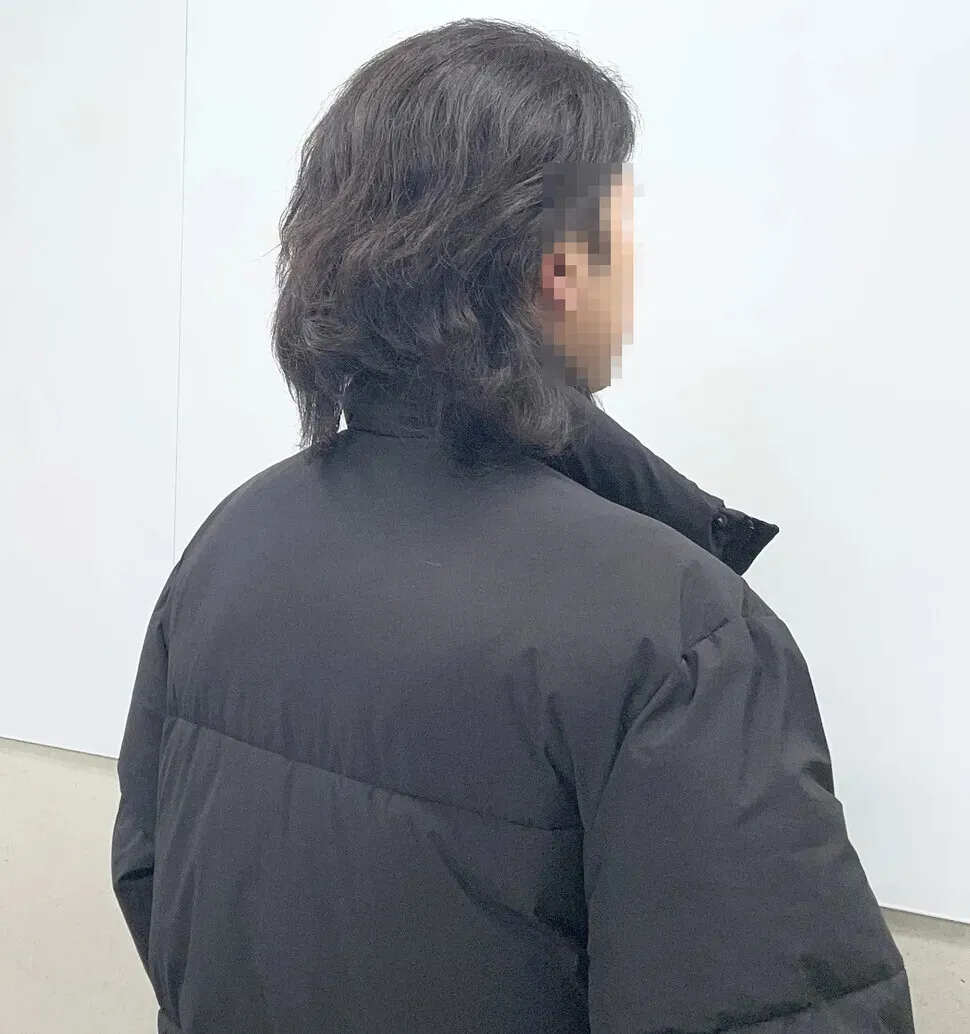
“No, it was our own psyops group that first launched leaflets into North Korea.”
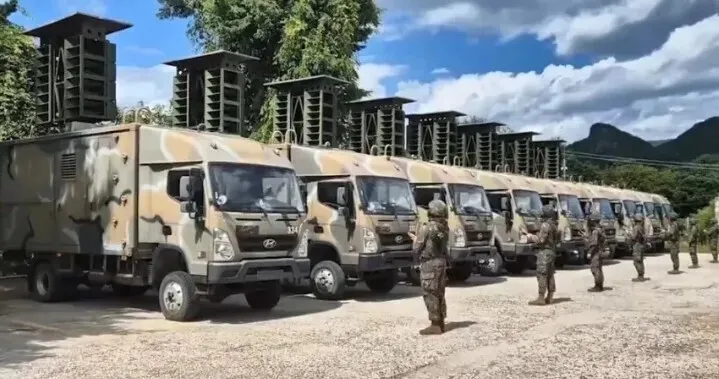
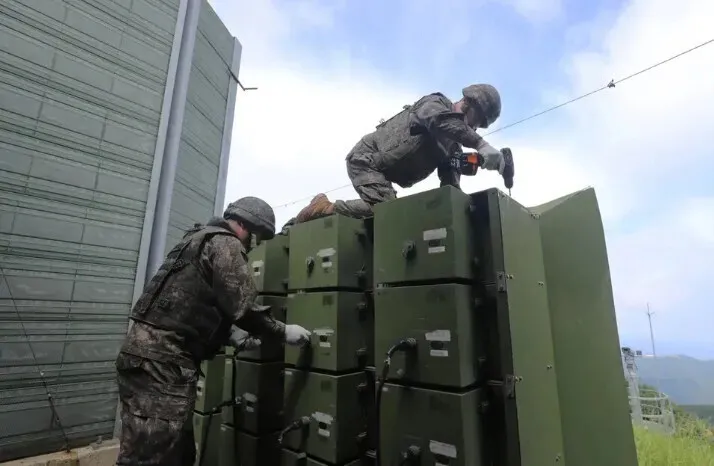
The former soldier smiles bitterly when he recalls the South Korean military’s claim that North Korea’s release of garbage-laden balloons had prompted it to resume propaganda broadcasts on loudspeakers on the border with North Korea.
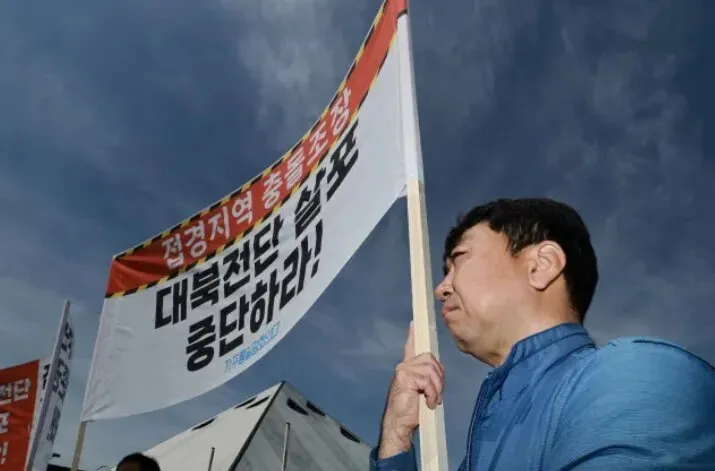
That was in May and June of last year, during a time of rising tensions when defector groups launched leaflets into North Korea, which responded by lobbing waste back across the border. South Korea then resumed loudspeaker propaganda broadcasts, prompting North Korea to turn on its own loudspeakers.
The young man performed his military service as a member of South Korea’s Defense Psychological Operations Group in 2023 and 2024.
South Korea halted its balloon launches shortly before the martial law declaration on Dec. 3, 2024, and President Lee Jae Myung halted the loudspeaker broadcasts as a preemptive measure this June, leading North Korea to turn off its own loudspeakers.
The former soldier gave a very detailed account of the psyop group’s activities to the Hankyoreh on Sunday. He declined to reveal his face or real name out of consideration for the soldiers he had served beside.
Since he was tasked with technical calculations for the group’s leaflet launching operations, he had a clear grasp of the situation. The whistleblower’s role was determining the areas with the best wind speed and direction for the balloon launches, the amount of hydrogen to put in the balloons, and the weight of the leaflets to be carried by the balloons.
The former soldier offered the following explanation for why he decided to blow the whistle.
“Given constant reports indicating that the psyop unit’s launch of propaganda balloons was a provocation aimed at setting the stage for a martial law declaration, I concluded there was absolutely no reason for me to conceal this information.”
The former soldier also said he was angry that the rash leaflet launches had put service members at risk of retaliatory strikes by North Korea.
“Since we didn’t even alert front-line units about the leaflet launch operations, those units were confused and alarmed by every balloon launch,” the whistleblower said.
According to him, service members’ safety took a back seat to the secrecy and success of the operations.
Hankyoreh: When did the operation to launch leaflets into North Korea begin?
Whistleblower: A few months after Yoon Suk-yeol became president, I was assigned to the psyops group. When I first joined, my older buddies and the noncoms were concerned that our unit might be dissolved. After the Panmunjom Declaration in April 2018, South and North Korea had agreed to stop loudspeaker broadcasts and halt leaflet launches around the Military Demarcation Line.
When Yoon became president, our drills became more frequent and more intense. But even then, we still weren’t actually launching leaflets. We just assumed the psyops drills were intended as preparations for wartime. But the mood changed after the Constitutional Court struck down a law banning launches of leaflets into North Korea in September 2023. After that decision, we were sent to the front lines for training that approximated the real thing. After the exercises in October, an officer in our unit brought us together and told us we would be doing actual launches in the future.
Hankyoreh: Where was your training held, and what did it involve?
Whistleblower: The training was held to the rear of the bases on the front. There was a risk of balloons accidentally flying into North Korea during training. But after the Constitutional Court struck down that law, the exercises were moved to the front and treated like actual operations. We would carry out all the prelaunch procedures and then pop the balloon instead of releasing it. After the training was over, our officer gathered together the platoon members and told us we weren’t to tell friends or family members, or even members of other platoons, about the training. The atmosphere in the unit grew tense after that.
Hankyoreh: How did you maintain secrecy?
Whistleblower: We were told that not even the Joint Chiefs of Staff could be made aware of the operation. The Joint Chiefs periodically review units’ combat readiness. During those reviews, we would take the leaflet launch equipment out of the typical storage area and move it somewhere else.
Hankyoreh: How did the actual balloon launches work?
Whistleblower: We began flying leaflets into North Korea in October 2023. The launches typically took place at night. That’s when our operational manual told us to launch them. The timing was between 9 and 11 pm.
There are several requirements for carrying out a launch, but the most important one is wind direction. The wind has to be blowing to the north. We would sometimes scrap a launch in the middle because the wind direction was unreliable or had changed. I think we did 10 launches altogether. When we confirmed that the balloon had reached the target destination, we would be praised and encouraged by our superiors.
Hankyoreh: Generally speaking, where were the balloons supposed to reach?
Whistleblower: We drew lines on our military charts between North Korean military bases, airports and cities above a certain population based on data from previous launches. Then we selected points on those lines in consideration of the speed and direction of the wind and the amount of fuel [hydrogen] the balloon could carry. In theory, the balloons could reach Russia, but in reality, we flew them as far as Wonsan in Kangwon Province [in North Korea]. Given the accumulated data, we could send as many balloons as we wanted to the desired locations.
Hankyoreh: What shape were the balloons, and how many were there in each launch?
Whistleblower: The word “balloon” is something of a misnomer given the size of these things. They were as tall as a two- or three-story building, and the biggest could lift a human being. Each balloon carried around 10 kilograms of leaflets. With 100 balloons typically part of each launch, we were sending over around 1,000 kilograms of leaflets.
Hankyoreh: What did the leaflets say?
Whistleblower: There were about 10 different kinds. As far as I can remember, one said that South Korean soldiers can go to the hospital when they get sick and get plenty of hot meals. There was also a photograph of South Korean college girls going on a trip overseas. The leaflets also discussed the price of the luxury handbags carried by Kim Yo-jong [sister of North Korean leader Kim Jong-un].
Hankyoreh: Were leaflets the only thing you sent?
Whistleblower: Our unit generally only sent leaflets, but a few times we did send radios and USB flash drives containing the drama “Crash Landing on You.”
Hankyoreh: In May 2024, North Korea began reacting angrily to the leaflets launched by civic groups. Were there any calls for caution inside your unit at the time?
Whistleblower: There was nothing of the kind. We just kept launching balloons when the wind was blowing in the right direction.
Hankyoreh: Were there any tough aspects of your service?
Whistleblower: The launches were held at night, after our daily duties, and we weren’t given time off the next day. The military is supposed to reward troops with noncombat duty after nighttime operations, but that didn’t happen. To get clearance for time off, the unit would have to report what we’d done the previous night. But we weren’t allowed to officially report or record our leaflet launches. Both the enlisted personnel and the officers were very unhappy about that. So in May, they started giving us leave and liberty after several balloon launches.
Hankyoreh: While carrying out the mission, did you ever find yourself questioning whether you should be doing this, or if it was dangerous?
Whistleblower: Absolutely. One time, I actually said to my platoon leader, “Isn’t this wrong of us to do?” out of concern that what we were doing was essentially a provocation and a violation of the armistice. Other members of my unit were pretty unnerved by the fact that we were making the first move in provoking them for a while, until at some point, they just did what they had to. Thinking back now, it was a reckless, dangerous operation. I mean, this was essentially an operation to elicit an attack from North Korea, and soldiers were made to carry out this mission when who knows what could have happened while they were doing it.
Even the units on the front line would go into emergency mode each time we sent leaflets. We didn’t tell units in the area that we were carrying out operations to disseminate leaflets, so of course, the soldiers on guard duty at the guard posts and general outposts along the Military Demarcation Line would report to higher-ups when they saw balloons floating toward the North. Those units would call our unit and ask if we were sending up leaflets, and we’d just play dumb, saying stuff like, “Not us,” “No clue,” or “Not at liberty to say.” Those other units had to deal with so much trouble without a clue as to what was actually happening.
Hankyoreh: What do you think of what you did now that you’ve been discharged?
Whistleblower: It left a bitter taste in my mouth when the news talked about the North Korean trash balloons by saying that North Korea was “provoking” us, because honestly, I felt they were just retaliating after we started sending leaflets into North Korea first. After the martial law crisis last year, it occurred to me that we really had been trying to bait North Korea into a fight. Then, later, when I saw reports about the drone [incursions into] Pyongyang that were being investigated by the special counsel probe, my heart sank when I realized that the work that I had done had been part of the plan for an insurrection.
By Kwon Hyuk-chul, staff reporter
Please direct questions or comments to [english@hani.co.kr]

Editorial・opinion
![[Column] Back to the bad old pre‑WWII days](https://flexible.img.hani.co.kr/flexible/normal/500/300/imgdb/original/2026/0203/2317701066525269.jpg "[Column] Back to the bad old pre‑WWII days") [Column] Back to the bad old pre‑WWII days
[Column] Back to the bad old pre‑WWII days![[Guest essay] Will humans be crushed by the AI tide, or carried by it?](https://flexible.img.hani.co.kr/flexible/normal/500/300/imgdb/original/2026/0203/7217701098163121.jpg "[Guest essay] Will humans be crushed by the AI tide, or carried by it?") [Guest essay] Will humans be crushed by the AI tide, or carried by it?
[Guest essay] Will humans be crushed by the AI tide, or carried by it?- [Guest essay] UNC is not the boss here — Korea needs to say so
- [Column] Bond warfare threatens mutually assured destruction
- [Column] How North Korea’s upcoming party congress could change history
- [Column] American democracy is dying, and masked agents are killing it
- [Editorial] As Seoul takes on greater defense duties, UNC must adapt as well
- [Correspondent’s column] Welcome to never-ending tariff negotiation hell
- [Column] Atlas the robot and the A-bomb
- [Editorial] A slap on the wrist for Korea’s former first lady
Most viewed articles
- 1[Column] Dawn of the age of fascism
- 2KOSPI’s rollercoaster ride continues: Index rallies 7% to new high after 5% drop
- 3Non-homeowners suffer most from unfair surges in home prices, says Lee
- 4[Column] Telling workers that automation is unavoidable helps no one
- 5[Letters from Gaza] The war forced my mother to choose between life and limb
- 6[Column] How North Korea’s upcoming party congress could change history
- 7‘Golden’ from ‘KPop Demon Hunters’ wins K-pop its first Grammy
- 8With a click, 220,000+ member Telegram room generates illegal deepfake porn
- 9[Column] Back to the bad old pre‑WWII days
- 10[Guest essay] UNC is not the boss here — Korea needs to say so