hankyoreh
Links to other country sites 다른 나라 사이트 링크
Defense minister nominee under fire for implying Koreans better off under Japanese rule
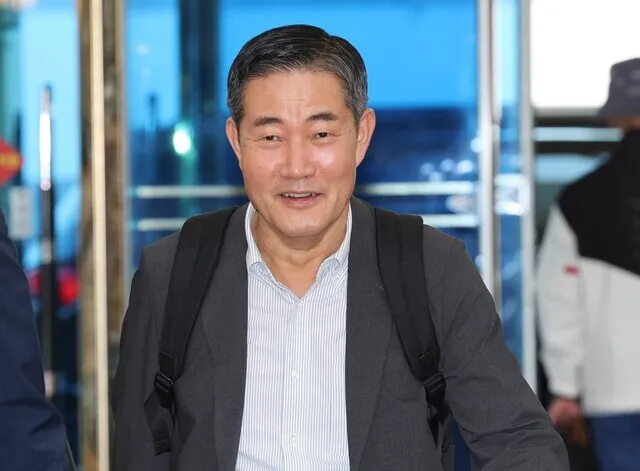
After coming under fire for comments defending the military coups that led to dictatorships by Park Chung-hee and Chun Doo-hwan, the nominee to become South Korea’s new defense minister finds himself in hot water again for newly uncovered remarks that betray a pro-Japan, colonial view of history.
Shin Won-sik, a general who turned to politics after retirement from the military, exhibited his view of history in his statement that Lee Wan-yong, a Korean politician who infamously went along with Japan’s annexation of Korea in 1910, had no choice but to sell out his country.
Now, a previous comment in which he suggested Koreans would not necessarily have been happier if the Empire of Korea persisted instead of being colonized by Japan has been brought to light.
Experts pointed out that the statement is “typical” of a colonial view of history. Shin’s historical view is expected to come under fire ahead of his confirmation hearing on Wednesday.
![Shin Won-sik appears in a video uploaded to the YouTube channel “Voice of Generals” on Aug. 14, 2019, titled “[Special guest] ROK-JPN conflict: What to do about GSOMIA?” (still from YouTube)](https://flexible.img.hani.co.kr/flexible/normal/640/365/imgdb/original/2023/0927/1816958010241558.webp)
A video on the conflict between South Korea and Japan and the two countries’ general security of military information agreement, or GSOMIA, uploaded on the YouTube channel “Voice of Generals” operated by the group Reservist Generals Defending the Republic of Korea on Aug. 14, 2019, and accessed on Monday shows Shin stating, “The Moon Jae-in administration intentionally worsened ties between South Korea and Japan. The public should set things right in moments like this. One should consider the meaning of anti-Japan and extreme-Japan sentiment, or the circumstances of the times at the turn of the 19th century.”
Referring to world powers like the Qing dynasty and Russia, both of which engaged in hegemonic competition with Japan to claim dominance over the Korean Peninsula, Shin went on, “Although there are no ifs in history, the Empire of Korea would have faced a disaster regardless of who won against whom. There was no such thing as human rights or individual property rights in the Empire of Korea, which succeeded the Joseon dynasty. How could we be sure that we would have been happier if the Empire of Korea persisted instead of being colonized by Japan?”
Shin then claimed, “We’ve done enough of hating [Japan] for occupying us, and we’ve received apologies and compensation. What’s important now is to forget the past and learn the lesson that we have to build our country’s prosperity and strength so the same thing doesn’t happen again.”
These comments were made along with remarks critical of the Moon administration at a time when conflict between South Korea and Japan was reaching its climax after Japan excluded South Korea from its white list in retaliation to the South Korean Supreme Court’s decision that victims of forced labor during the Japanese colonial period had to be compensated.
Regarding this, Korea University Korean history professor Jung Tae-hern described Shin’s statement as stemming from a “typical ‘new right,’ imperialistic historical view” and based on “the belief that it would have been better for Korea to remain a Japanese colony instead of gaining independence.”
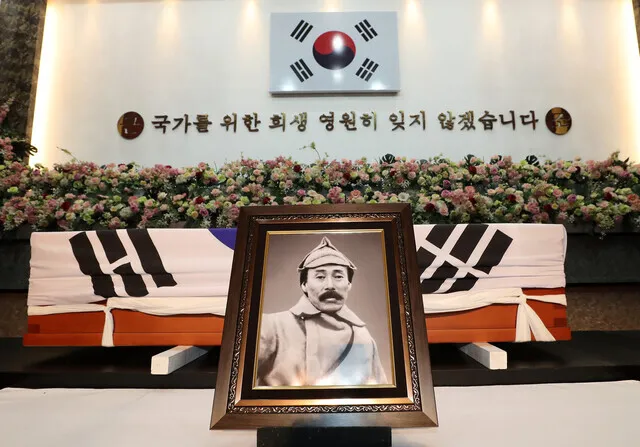
This colonial attitude to history, created by Japanese imperialists to justify their colonization of Korea, argues that Korea collapsed of its own accord and that Japanese invasion was inevitable.
The New Right has proselytized a theory that claims that Japanese colonial rule contributed significantly to the modernization of Korea.
“If someone with this kind of historical consciousness is in charge of defense, they will immediately look the other way when there is a threat of foreign invasion,” Jung said.
Regarding Shin’s claim that Korea should “forget” about the past since Japan has apologized, Jung commented, “Japan has issued apologies before, but immediately retracted them. That’s how we’ve gotten ourselves here at this point today. Currently, Japan recognizes none of its history.”
Shin’s camp defended the remarks.
“The remark was made with the intention to explain that we should build up our strength so that we are not invaded or dominated by foreign powers,” the candidate’s camp commented. “[Shin] has never attributed Korea’s colonization to the fault of our own people or turned a blind eye to Japan’s responsibility for invading Korea.”
Shin, who also spearheaded the removal of a bust of Korean independence fighter Hong Beom-do from the Korea Military Academy, has been mired in controversy since his nomination, with past comments that seem to parrot the colonial narrative and flippant remarks about former President Moon Jae-in.
On Sep. 4, 2019, he appeared in a YouTube video and claimed that Park Chung-hee’s military coup on May 16, 1961, was a “social, economic and philosophical revolution,” and that Chun Doo-hwan’s military coup of Dec. 12, 1979, took place because “Chun believed he had to save the country.” Both comments stirred much controversy.
In the full text of his speech at an Aug. 24, 2019, rally of the Liberty Korea Party (the predecessor of the People Power Party), posted on the website of conservative journalist Cho Gab-je, he claimed, “We condemn Lee Wan-yong as the ultimate traitor, but at the time there was too big of an imbalance of power between the Empire of Korean and Japan that, even if the Korean Empire had resisted, it would have been difficult to maintain its independence. Although Lee was a traitor, we need to consider the fact that in some respects it was unavoidable.”
“He was not trying to absolve Lee, but rather emphasize that the Moon administration’s foreign and security policy was worse for the national interest than Lee’s,” Shin’s camp clarified.
By Lee Yu-jin, staff reporter; Kwon Hyuk-chul, staff reporter
Please direct questions or comments to [english@hani.co.kr]

Editorial・opinion
![[Guest essay] Korea is a ‘content’ powerhouse — is AI about to change that?](https://flexible.img.hani.co.kr/flexible/normal/500/300/imgdb/original/2026/0301/311772326354815.jpg "[Guest essay] Korea is a ‘content’ powerhouse — is AI about to change that?") [Guest essay] Korea is a ‘content’ powerhouse — is AI about to change that?
[Guest essay] Korea is a ‘content’ powerhouse — is AI about to change that?![[Column] Coupang’s play in Washington](https://flexible.img.hani.co.kr/flexible/normal/500/300/imgdb/original/2026/0227/7817721808892682.jpg "[Column] Coupang’s play in Washington") [Column] Coupang’s play in Washington
[Column] Coupang’s play in Washington- [Editorial] Clarification and accountability needed on USFK standoff with Chinese jets
- [Editorial] USFK’s provocation of China demands more than perfunctory protest by Seoul
- [Editorial] PPP’s refusal to cut ties with Yoon will be its undoing
- [Editorial] Korea is no staging ground for US operations against China
- [Editorial] Court convicts Yoon, but fails to fully reckon with his attempted coup
- [Editorial] Just because Japan is rushing US investments doesn’t mean Korea should
- [Column] Moment of truth: What the Epstein files really show us
- [Editorial] Coupang’s lobbying in US won’t win back Korean customer base
Most viewed articles
- 1[Guest essay] Korea is a ‘content’ powerhouse — is AI about to change that?
- 2[News analysis] Behind split strategies, Kim Jong-un stays focused on regime security, advancement
- 3[NBS] Korea’s Lee logs 67% approval rating, his highest since taking office
- 4South Korea‘s top 100 income tax payers earned 1,523 times the median
- 5Koreans are getting taller, but half of Korean men are now considered obese
- 6USFK denies apologizing to Seoul for standoff with Chinese jets
- 7Threatening North Korea has not made peninsula any safer, says South Korea’s Lee
- 8S. Korea secures lives of 391 Afghans in Operation Miracle
- 9[Column] Coupang’s play in Washington
- 10Former bodyguard’s dark tale of marriage to Samsung royalty