hankyoreh
Links to other country sites 다른 나라 사이트 링크
Goliath’s defeat: What Iran reveals about America’s future
The deal reached by the US and Iran seems likely to end their 107-day war. More than a mere conflict in the Middle East, the war has brought major changes to the US-led world order that is now more than half a century old. This article will look at the erosion of the US system of hegemony, changes to the balance of power in the Middle East, and fractures in the Western system of alliances.
While wars in Vietnam, Iraq and Afghanistan revealed the failure of the US’ strategic judgment, the 107-day-war in Iran is on a different level altogether. While this war, too, represents a failure of strategic judgment, it also demonstrated on the battlefield how the US’ hegemony and unassailable advantage in national and military power are being eroded.
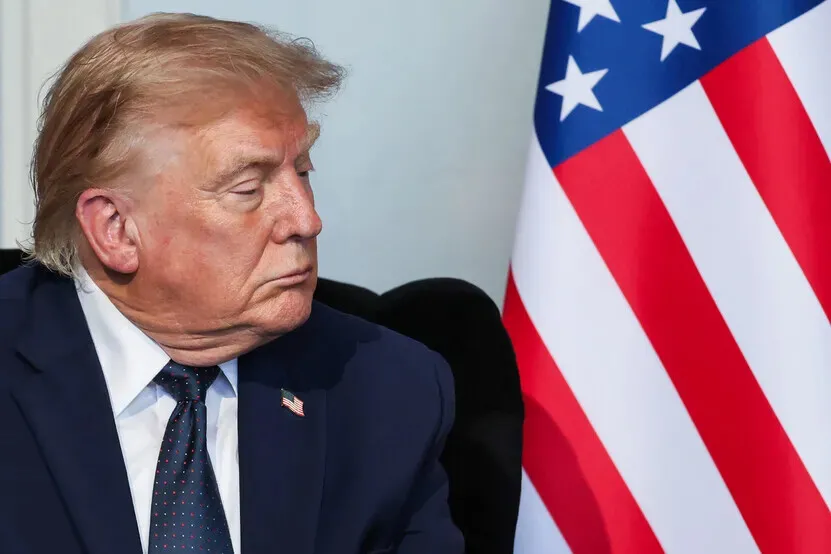
In 2018, during his first term in office, US President Donald Trump unilaterally withdrew from the Joint Comprehensive Plan of Action (JCPOA), the international agreement that sought to regulate Iran’s nuclear program. Then, in late February of this year, in the second year of his second term, Trump joined Israel in a war against Iran.
Over the course of more than 100 days of fighting, the US military was unable to force Iran to capitulate. If anything, it was the US that was under pressure from Iran, which seized control of the Strait of Hormuz, a critical conduit for 20% of the world’s maritime supply of crude oil.
After protracted negotiations, the US reached a deal with Iran on Sunday to end the war. But the resulting memorandum of understanding is not likely to improve upon the JCPOA framework. Many both at home and overseas demand to know why the war was fought, and the Iran war will probably be added to the long list of US military failures along with the Vietnam War, the Iraq War and the War in Afghanistan.
After the quagmire of those three land wars, the US adopted the doctrine of surgical strikes in its war against Iran, seeking to bring the Iranian regime to its knees through naval and air power alone, without deploying ground forces.
Indeed, Trump has been a faithful practitioner of the surgical strike doctrine, which was elaborated under President Bill Clinton. Since beginning his second term in office last January, Trump has launched military strikes in seven countries altogether (Iran, Iraq, Nigeria, Somalia, Syria, Venezuela and Yemen). Military operations ostensibly aimed at wiping out drug smugglers continue in the Caribbean even now. The Trump administration seeks to swiftly end wars with cutting-edge precision weaponry without resorting to ground troops.
The war in Iran represented a major expansion of the surgical strike doctrine. Trump’s plan was to engineer speedy regime change by mobilizing large amounts of naval and air forces to eliminate the Iranian leadership without putting any “boots on the ground.”
But far from achieving regime change, the US lost control of the Strait of Hormuz and had to enter ceasefire negotiations with Iran without ever regaining control. More seriously, the war has undermined the alliance system that has sustained American hegemony, its network of military bases overseas, and the system of the freedom of navigation.
On March 14, Trump all but begged China, France, Japan, Korea and the UK to send ships to eliminate the threat in the Strait of Hormuz, but no countries responded to his call. Some European members of the NATO alliance even refused to allow US forces to transit through their airspace or use bases in their territory.
Trump decried that as betrayal and threatened to reduce the security that the US provides Europe. In effect, major cracks have opened up in the transatlantic alliance that has been a major pillar of European security and the world order since World War II.
The assumption that a contingent of US troops provides security has also been upended by the war against Iran. The US has maintained its military hegemony through transoceanic naval power that depends on some 750 bases and facilities in over 80 countries.
But during the war against Iran, US bases in the Middle East were not a security umbrella but targets for attack. US bases scattered throughout the Middle East in such countries as Qatar and the United Arab Emirates were exposed to Iranian strikes and suffered significant damage.
The headquarters of the US Navy’s 5th Fleet in Bahrain was struck by Iranian drones and ballistic missiles on the first day of the conflict. In an unprecedented development, US troops had to flee their bases and carry out their duties in hotel rooms and private offices. This was the first time since World War II that US military bases have been so severely damaged.
Middle Eastern countries that had provided bases for the US military at such great cost had to watch as those bases were used to defend not themselves but Israel during the war against Iran.
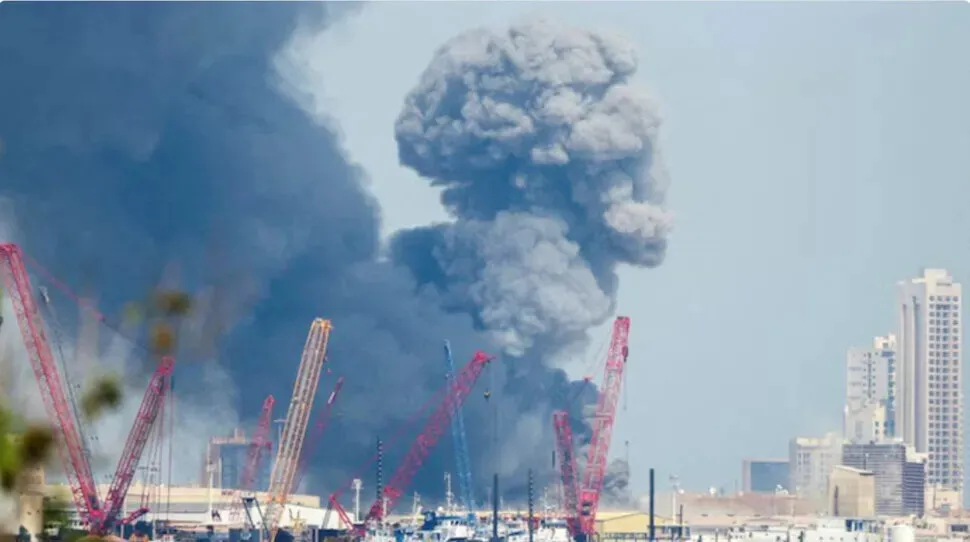
The principle of the freedom of navigation — which the US has provided as a public good, and a symbol of its hegemony, through its iron grip on the world’s oceans — has also lost its luster during the conflict. Despite the US’ overwhelming military advantage over Iran, it could not break Iran’s stranglehold on the Strait of Hormuz, powered by cheap drones and conventional weapons.
As oil and gas prices soared due to the strait’s closure, countries around the world reeled from rising prices, and Americans turned against the war. Despite being at a disadvantage, Iran was able to use its blockade as leverage against Trump, who has his eye on the midterm elections this November. The war also showed that the US can no longer guarantee the freedom of navigation for the entire world.
Under the slogan of “America First” — which amounts to seeking all the perks of hegemony without fulfilling the expected duties — the second Trump administration has refocused its foreign policy and defense policy on the Americas. Amid a structural retrenchment of US hegemony, the Iran war has shown that the network of overseas bases and the transoceanic naval power that have made possible the US’ global force projection are being eroded.
According to military spending figures for 2024 published last year by the Stockholm International Peace Research Institute (SIPRI), Iran’s spending was just 1/120th of the US’. Yet the US struggled in the war, which raises serious doubts about its prospects in a putative conflict with its strategic rival China.
In the areas of military spending, manufacturing capacity, technological level, nuclear arsenal, and anti-access/area denial (A2/AD), China is a superpower that far outstrips Iran. So if the war against Iran previews the decline of American hegemony, the main event could be far crueler.
By Jung E-gil, senior staff writer
Please direct questions or comments to [english@hani.co.kr]

Editorial・opinion
![[Column] Japan and South Korea: An alliance of middle powers?](https://flexible.img.hani.co.kr/flexible/normal/500/300/imgdb/original/2026/0615/4017815116945786.jpg "[Column] Japan and South Korea: An alliance of middle powers?") [Column] Japan and South Korea: An alliance of middle powers?
[Column] Japan and South Korea: An alliance of middle powers?![[Editorial] Korea must use G7 summit to band together with fellow middle powers](https://flexible.img.hani.co.kr/flexible/normal/500/300/imgdb/original/2026/0615/5817815111712322.jpg "[Editorial] Korea must use G7 summit to band together with fellow middle powers") [Editorial] Korea must use G7 summit to band together with fellow middle powers
[Editorial] Korea must use G7 summit to band together with fellow middle powers- [Editorial] Sinking Korean youth employment in AI era requires action, and fast
- [Editorial] Korean students show how to protest ballot fiasco without resorting to conspiracies
- [Column] What do people crying election fraud in Korea even want?
- [Column] Once security assets, US bases are now liabilities to host countries
- [Column] Takaichi is putting Japan’s constitution in crisis
- [Editorial] Losing Seoul mayor’s race should be a wakeup call for Democrats
- [Column] Naming the enemy: The unsettling return of ideological litmus tests in Korea
- [Editorial] No excusing ballot shortage fiasco
Most viewed articles
- 1[Editorial] Korean democracy 20 years after the death of Park Jong-cheol
- 2‘Trump surrendered’: US conservatives fume over Iran deal
- 3Goliath’s defeat: What Iran reveals about America’s future
- 4Korea’s conservative opposition leader drags party into battle for election do-over
- 5Seoul’s PPP mayor blasts party leader for exploiting ballot fiasco to cling to power
- 6Korean firms reportedly among backers of $300B Iran postwar investment fund
- 7Samsung to measure how many of its employees’ jobs AI can replace
- 8Korean sports groups denied access to offices for nearly 2 weeks due to ballot protests
- 9With 400,000 undocumented workers in Korea, Lee administration weighs paths to legal status
- 10[Q&A] Why Japan is angling for a military logistics pact with South Korea