hankyoreh
Links to other country sites 다른 나라 사이트 링크
Will Lee make headway with Trump on Korea’s $350 billion investment pledge at APEC?
The biggest task that South Korean President Lee Jae Myung faces during next month’s Asia-Pacific Economic Cooperation summit in Gyeongju will be finding a way to break through the deadlock in tariff negotiations with the US regarding Seoul’s pledge to invest US$350 billion in its ally during his meeting with US President Donald Trump.
The Trump administration continues to ratchet up the pressure on the Lee administration. After Lee boarded a plane back to South Korea from New York, where he attended the UN General Assembly, reports surfaced of US Secretary of Commerce Howard Lutnick making demands for an investment even greater than US$350 billion. Trump then remarked that the US$350 billion would be in cash “up front” — a condition that had never before been stipulated by either party.
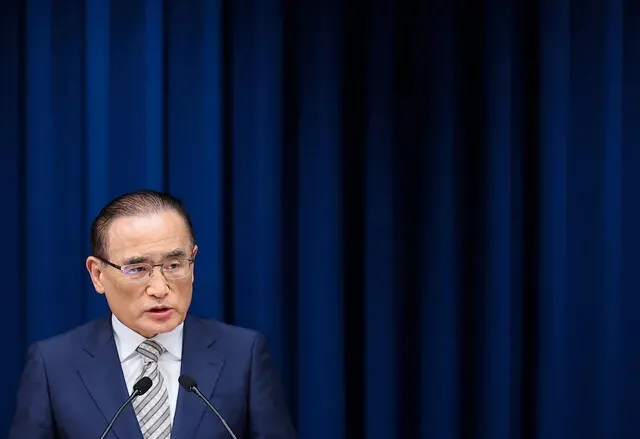
The developments have put the Lee administration in a bind. “From our standpoint, offering US$350 billion in cash is not possible, so we’re exploring alternatives,” Wi Sung-lac, Lee’s national security adviser, said during a press conference on Monday.
“It’s still unclear whether President Trump’s remarks were in response to our stance that it [US$350 billion] would be untenable or whether he’s repeating his former stance,” the adviser said.
As the US’ demands become increasingly immoderate, some officials within Lee’s own administration have begun denouncing Washington’s approach to negotiations and demanding a stronger response from Seoul. The situation has led many to argue that Korea would be better off accepting the 25% tariff on its automobiles entering the US than to cough up US$350 billion in cash.
However, the administration seems to have concluded that walking away from negotiations and exacerbating the rift in relations with the US would only make things even more difficult for Korea, considering the country’s current economic and political circumstances. At the same time, Korea can’t afford to keep negotiating in perpetuity.
If a formal agreement is not reached regarding the investment fund and Trump’s tariffs, then not only will South Korean companies suffer under high tariff rates, it will make things increasingly difficult in defense negotiations involving issues like increases in defense spending, alliance modernization, and the transfer of wartime operational control over South Korean forces, or OPCON. This is why the Lee administration continues to engage in talks with the US while suggesting that is the only path forward.
The presidential office believes Lee’s second meeting with Trump during the APEC summit in October will be a critical hurdle in the two sides’ ongoing tariff negotiations. The administration is determined to spend the remaining month before the forum continuing to negotiate and explaining South Korea’s situation while trying to find a point of compromise that best serves the country’s interests.
On Tuesday, the US and South Korea are scheduled to hold their first meeting of their newly created working group on visa issues in Washington since hundreds of Korean workers were arrested in Georgia in an immigration raid earlier this month.
By Park Min-hee, senior staff writer
Please direct questions or comments to [english@hani.co.kr]

Editorial・opinion
![[Column] Coupang’s play in Washington](https://flexible.img.hani.co.kr/flexible/normal/500/300/imgdb/original/2026/0227/7817721808892682.jpg "[Column] Coupang’s play in Washington") [Column] Coupang’s play in Washington
[Column] Coupang’s play in Washington![[Editorial] Clarification and accountability needed on USFK standoff with Chinese jets](https://flexible.img.hani.co.kr/flexible/normal/500/300/imgdb/original/2026/0226/4817720940359806.jpg "[Editorial] Clarification and accountability needed on USFK standoff with Chinese jets") [Editorial] Clarification and accountability needed on USFK standoff with Chinese jets
[Editorial] Clarification and accountability needed on USFK standoff with Chinese jets- [Editorial] USFK’s provocation of China demands more than perfunctory protest by Seoul
- [Editorial] PPP’s refusal to cut ties with Yoon will be its undoing
- [Editorial] Korea is no staging ground for US operations against China
- [Editorial] Court convicts Yoon, but fails to fully reckon with his attempted coup
- [Editorial] Just because Japan is rushing US investments doesn’t mean Korea should
- [Column] Moment of truth: What the Epstein files really show us
- [Editorial] Coupang’s lobbying in US won’t win back Korean customer base
- [Column] Today’s diverging paths of human virtue, hegemony and tyranny
Most viewed articles
- 1Real-life heroes of “A Taxi Driver” pass away without having reunited
- 2Threatening North Korea has not made peninsula any safer, says South Korea’s Lee
- 3Russian Embassy in Seoul ignores host nation’s request to remove pro-war banner
- 4[News analysis] Behind split strategies, Kim Jong-un stays focused on regime security, advancement
- 5Former bodyguard’s dark tale of marriage to Samsung royalty
- 6Trump open to talking with Kim Jong-un ‘without any preconditions,’ says White House
- 7[NBS] Korea’s Lee logs 67% approval rating, his highest since taking office
- 8Hard labor an increasing punishment for poor people unable to pay fines
- 9Rosé’s ‘APT.’ was best-selling single of 2025, a first for singer not from North America or Europe
- 10[Editorial] USFK’s provocation of China demands more than perfunctory protest by Seoul