hankyoreh
Links to other country sites 다른 나라 사이트 링크
‘Chinese interference’? Behind the White House’s bizarre response to Lee’s election
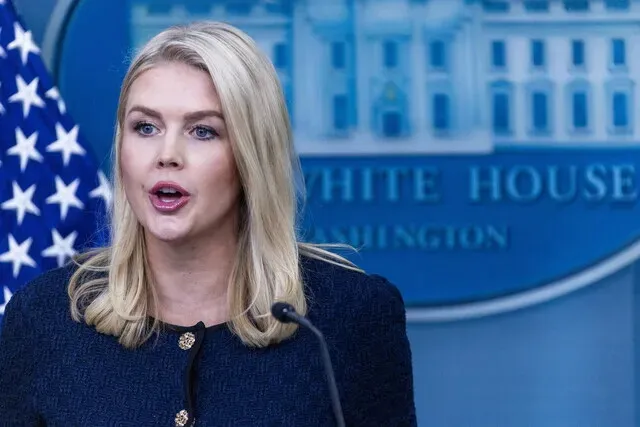
At the very beginning of Lee Jae-myung’s presidency, the White House took the unusual step of raising concerns about “Chinese interference and influence in democracies around the world” without even offering a word of congratulations to Lee.
In response to media questions about Lee’s election victory, a White House official said that the US-ROK alliance “remains ironclad.”
ROK stands for the Republic of Korea, which is South Korea’s official name.
“While South Korea had a free and fair election, the United States remains concerned and opposed to Chinese interference and influence in democracies around the world,” the official went on to say.
It is unusual for the White House to voice concerns about “Chinese influence” at the beginning of a new Korean administration.
Although the White House rejected allegations of election fraud, this was still an undiplomatic message that’s open to misinterpretation.
Analysts cited the influence of supporters of US President Donald Trump’s “Make America Great Again,” or MAGA, stance as a factor behind the message.
Steve Bannon, a leading MAGA figure who served as a senior White House strategist during Trump’s first term, was an open supporter of People Power Party candidate Kim Moon-soo. Far-right figures in South Korea and the US are closely tied, and some MAGA supporters claimed that the impeachment of Yoon Suk-yeol as South Korean president was the result of a “coup” with Chinese involvement.
The MAGA influence is especially strong in the case of the National Security Council, the chief White House office in terms of Washington’s position on South Korea.
Trump recently reduced the National Security Council staff from around 300 members to roughly 50. National security adviser Michael Waltz, whose loyalty was questioned by far-right activist and leading MAGA conspiracy theorist Laura Loomer, was among those ousted from their position.
In a message Wednesday on the social media service X, Loomer wrote, “RIP South Korea. The communists have taken over Korea and won the Presidential election today. This is terrible.”
Some analysts suggested the White House failed to control its messaging after letting go of eight out of nine Asia staffers in the National Security Council. The expression of the White House position in a backbriefing format is different in nature from an official statement credited to Secretary of State Marco Rubio, who is the figure responsible for US foreign affairs.
In a press statement, Rubio said, “We congratulate President Lee Jae-myung on his election as the next president of the Republic of Korea (ROK).” He went on to stress that South Korea and the US “share an ironclad commitment to the Alliance grounded in our Mutual Defense Treaty, shared values, and deep economic ties.”
“We will also continue to deepen US-Japan-ROK trilateral cooperation to [. . .] defend our shared democratic principles,” he also said.
At a time when the Trump administration has recently been pressuring allies to join in a unified front of opposition to China, the biggest issue with the White House’s message is the pressure it places on the Lee administration to distance itself from Beijing. It may be read as intended to counter Lee’s emphasis on pragmatism and balanced diplomacy.
Amid its recent focus on containing China, the Trump administration has been working to restructure alliances across the Indo-Pacific region, including the one with South Korea. While attending the Shangri-La Dialogue, an annual security conference, in Singapore last week, US Secretary of Defense Pete Hegseth issued a strong call for Asian allies to reinforce their defensive capability and join the US in its efforts to contain China.
Experts are predicting that Washington’s efforts will include increasing the “strategic flexibility” of US Forces Korea (USFK) to allow the US to operate Stryker brigades and other maneuver forces as it wishes, while restructuring the forces to station naval and air force capabilities at bases in Osan and Pyeongtaek where they would be available for China containment purposes.
“As it undertakes a major reorganization of the military posture in the Indo-Pacific region, the Trump administration will attempt to repurpose USFK for containment of China and issue strong demands for the South Korean military to play a role in the event of an emergency in Taiwan,” predicted Cha Tae-suh, a professor of political science and diplomacy at Sungkyunkwan University.
He also suggested that the US would “pressure South Korea to provide support as the US focuses on containing China by increasing its share of USFK defense costs and its own national defense spending.”
“How prepared the new South Korean administration is and how it responds are going to be crucial,” he said.
By Park Min-hee, senior staff writer
Please direct questions or comments to [english@hani.co.kr]

Editorial・opinion
![[Column] Coupang’s play in Washington](https://flexible.img.hani.co.kr/flexible/normal/500/300/imgdb/original/2026/0227/7817721808892682.jpg "[Column] Coupang’s play in Washington") [Column] Coupang’s play in Washington
[Column] Coupang’s play in Washington![[Editorial] Clarification and accountability needed on USFK standoff with Chinese jets](https://flexible.img.hani.co.kr/flexible/normal/500/300/imgdb/original/2026/0226/4817720940359806.jpg "[Editorial] Clarification and accountability needed on USFK standoff with Chinese jets") [Editorial] Clarification and accountability needed on USFK standoff with Chinese jets
[Editorial] Clarification and accountability needed on USFK standoff with Chinese jets- [Editorial] USFK’s provocation of China demands more than perfunctory protest by Seoul
- [Editorial] PPP’s refusal to cut ties with Yoon will be its undoing
- [Editorial] Korea is no staging ground for US operations against China
- [Editorial] Court convicts Yoon, but fails to fully reckon with his attempted coup
- [Editorial] Just because Japan is rushing US investments doesn’t mean Korea should
- [Column] Moment of truth: What the Epstein files really show us
- [Editorial] Coupang’s lobbying in US won’t win back Korean customer base
- [Column] Today’s diverging paths of human virtue, hegemony and tyranny
Most viewed articles
- 1Real-life heroes of “A Taxi Driver” pass away without having reunited
- 2Threatening North Korea has not made peninsula any safer, says South Korea’s Lee
- 3Russian Embassy in Seoul ignores host nation’s request to remove pro-war banner
- 4[News analysis] Behind split strategies, Kim Jong-un stays focused on regime security, advancement
- 5Former bodyguard’s dark tale of marriage to Samsung royalty
- 6Trump open to talking with Kim Jong-un ‘without any preconditions,’ says White House
- 7[NBS] Korea’s Lee logs 67% approval rating, his highest since taking office
- 8Hard labor an increasing punishment for poor people unable to pay fines
- 9Rosé’s ‘APT.’ was best-selling single of 2025, a first for singer not from North America or Europe
- 10[Editorial] USFK’s provocation of China demands more than perfunctory protest by Seoul