hankyoreh
Links to other country sites 다른 나라 사이트 링크
[K-pop: To Love or Let Go] When K-pop idols betray the fangirls who made them
Many Koreans grew up with K-pop. While they were gravitating first toward one favorite group and then another, K-pop was expanding into a dominant genre in the global music industry and a cultural juggernaut often mentioned in the context of Korea’s national interest.
But it’s uncertain whether it will be possible to keep viewing K-pop through such rose-tinted glasses. Music labels are obsessed with profit, and fans are sick of being milked for labor under the guise of showing their support. The genre has also had its share of incidents and scandals.
In our feature series “K-pop: To Love or Let Go,” we will tackle questions that are as uncomfortable as they are essential and discuss ways to make K-pop more sustainable.
If I were to name the generation I most identify with, I would say that I am part of the “TVXQ-SJ-501” generation, referring to a group of three K-pop boy groups — TVXQ, Super Junior and SS501 — that made their debut in the early-to-mid 2000s and garnered much popularity.
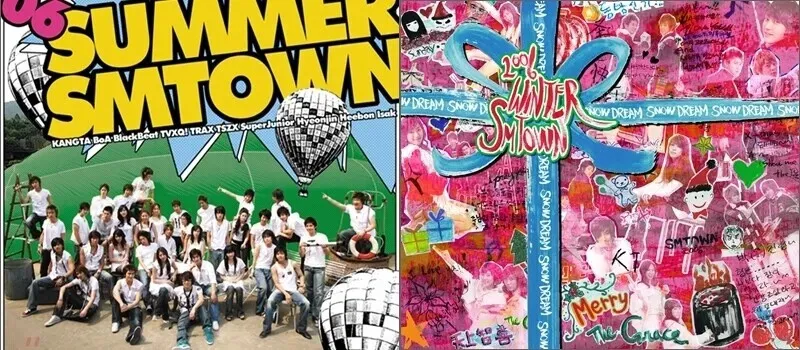
I fell in love with K-pop in 2006, when there were five members of TVXQ and 13 members of Super Junior. The elementary school I attended in South Chungcheong Province was full of avid fans of TVXQ and Super Junior, and in sixth grade, I made it clear to my classmates that I was a die-hard Donghae — a member of Super Junior — stan. SM Town, a collective for artists under SM Entertainment, released two studio albums that year, records to this day I insist I must be buried with when I die, and I, alongside other diehard K-pop stans, performed Super Junior’s “Miracle” at our last talent show of elementary school. Those were the halcyon days in which I could love K-pop with reckless abandon, a time that has long been lost.
Pouring your love and energy into something is never easy. Even though I finished up a manuscript for a K-pop-themed newsletter earlier and am currently writing about K-pop while listening to f(x)’s “Love,” I have started to feel a twinge in some corner of my heart whenever I voice my interest in K-pop.
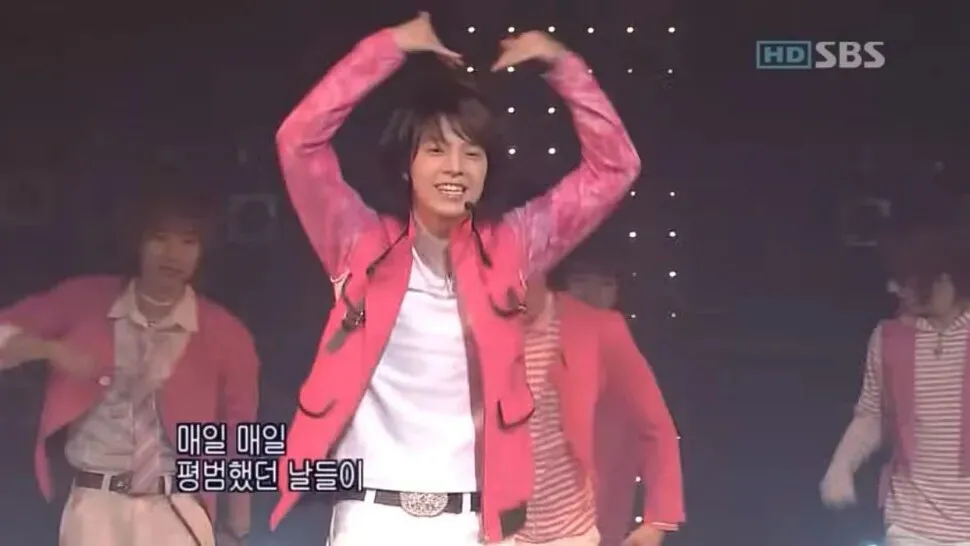
In the time that it took for BoA to become a director at the label that helped her make her debut at 15, a child to go from a “Jumping BoA” (the name of BoA’s fan club) to shine as SHINee’s Key, a kid who attended an NCT 127 concert to make his debut as NCT Wish’s Ryo, I put my time as a starstruck elementary school student with an obsession with Donghae behind me.
The child enraptured with everything that SM Entertainment did became, through much trial and error, a feminist, a laborer and acquired many other labels. As a weary individual trying to shoulder through life, despite the various burdens that slowed me down, I became privy to certain truths that eluded me in 2006.
The systemic exploitative nature of the K-pop industry, a market that continuously egged fans to make impulsive purchases and spend gratuitously, empty promises of sustainability and the various scandals and incidents involving the men who had once sent so many fans swooning — even though my only sin was pouring my heart into the industry, I was confronted with a rocky, rocky road. My attachment to K-pop sent spasms of guilt through me, and whenever the idols I had admired were embroiled in scandal after sordid scandal, I felt that I was being deprived of the freedom to love whomever I wished.
My burning passion for K-pop transformed into immense disappointment, bitterness and cynicism. It felt like an insult to the time and love I had devoted to it. This was not a phenomenon that only the unluckiest of fangirls experienced — my friends and I all experienced the sinking feeling when, slowly but surely, all of our idols did something to betray our trust. Even if they were not mentioned shamefully in the news, countless events arose to cause unrest among fandoms.
The world of K-pop never remained tranquil and calling myself a fan felt like being in a hell of my own making. It’s no wonder that I began to behold idols with uninterested eyes. So many groups I liked had done things I couldn’t condone, forcing my fangirling activities to a halt. (Oppas, are you listening? Please… I beg you... Get your lives together… Please...)
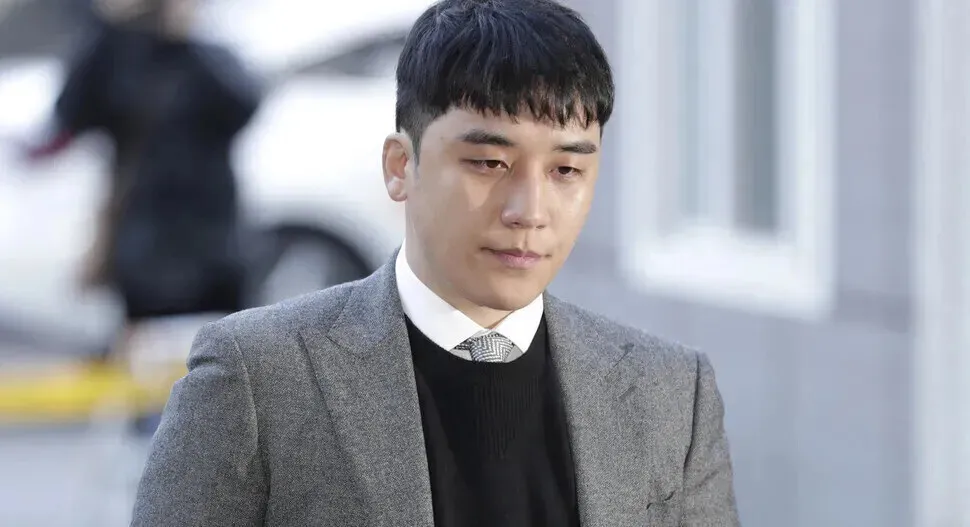
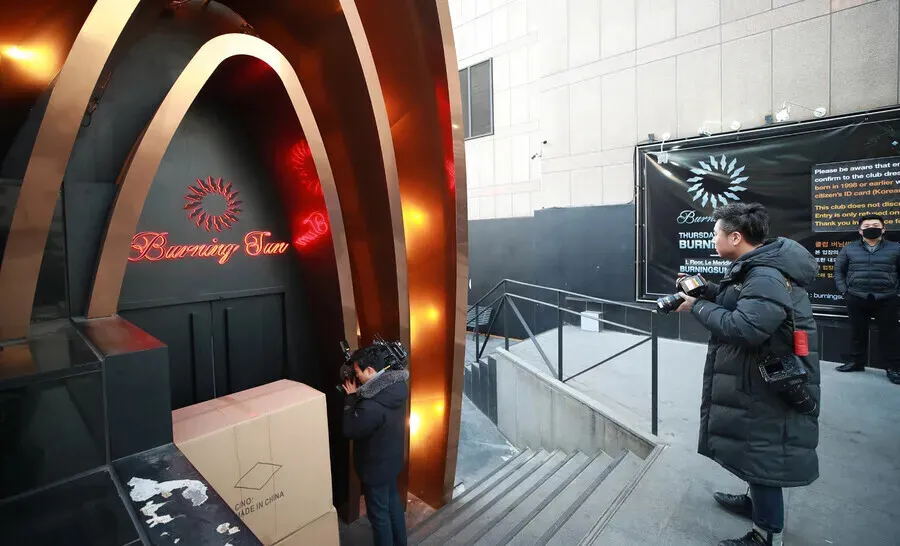
The Burning Sun scandal left an indelible black mark on K-pop history; it was a scandal that shook not only every K-pop fandom that existed but the entire world along with it. An investigation into an assault case at Burning Sun, a club in Seoul’s Gangnam District, brought to light cases of drug trafficking, sex crimes, usage of spy cams and sharing of non-consensual sexual footage as well as other criminal activities.
The case involved various household names — Seungri of Big Bang, Choi Jong-hoon of F.T. Island and Jung Joon-young of Superstar K fame. Evidence of the violence those men perpetrated against women made the rounds online. While so many people didn’t want to believe that their idols were capable of such monstrous behavior, people caught those same men roaming around the world and enjoying extravagant lives, never once expressing contrition or intent to keep a low profile.
In August 2024, news broke about NCT member Moon Tae-il’s indictment for sexually assaulting a woman who was incapacitated, an offense known as “quasi-rape” in Korea’s criminal code. SM Entertainment swiftly broke ties with him, but fans, who had no legal recourse for the damage they felt, had to live with the shock and despair that the news brought with it. Tae-il disappeared from the public eye without ever apologizing to the fans who had showered him with love and support.
Cases that did not involve male celebrities but showcased the disregard that was shown to women in South Korean society happened almost daily — the misogynistic murder at Gangnam Station, the “Nth Room” case of online sexual abuse, and the more recent cases involving the distribution of sexually exploitative deepfake material. Not only did we have to confront our complicated relationships with male K-pop idols, but we also had to ponder how we would live side-by-side with men as our fellow citizens. How is it that when the world takes a turn for the worse, the turn is so unbearably specific?
The unstoppable flow of time came with sadness that would never fade. Some sadnesses become more pronounced over time. Two people who are forever etched within me and my memory: Sulli and Goo Hara. Two working women who were objectified both off and on the stage, who were always at the mercy of the gaze and opinions of others. Saying goodbye to two people I had never exchanged words with plunged me into a particular type of despair I had never experienced before. I dwelled on what it meant to be a K-pop idol, the implications of the job, and the hardships they must have felt as individuals. I came to consider the lives of people who would have had to square up against violence and oppression daily, a little too late.
All that I could do was mourn. I find myself saddled with a guilt that seems to touch so many parts of me and my life. Any illusions I had about K-pop idols vanished after I saw two women the same age as me disappear from this world, and in them, I saw me and my friends. Malicious accusations and constant degradation, unverified allegations, unwarranted judgments, exploitative videos taken without their consent, verbal abuse, sexual assault, dating violence… all of these obscenities that they should not have experienced are, even today, sending so many people to their deaths.
I am still plagued by an enveloping, oppressive feeling of helplessness. It’s a feeling of guilt that I, somehow, helped this industry operate the way that it does. In my head, I constantly run through questions over whether I could have stopped certain deaths, if any fan could have prevented them, if we are in a relationship that makes it impossible for one party to save the other. Suspicion, frustration, despondency and dejection towered over me. The heart can never be prepared for events like this. How many more social murders will I witness in my lifetime? How many deaths have passed my notice, undocumented by anyone? The world is far from welcoming, so some have the audacity to resort to mockery in the face of unfortunate deaths. After experiencing a kind of grief that imprinted itself so clearly on my body and mind, I believed that I would find it hard to fall so deeply in love with K-pop idols ever again.
However, life never goes in the direction you want it to, and the fangirl life is not one that can be easily forgotten. What did I truly desire? After a lengthy separation from the world of K-pop, I found myself hopelessly head over heels in love. This time with a group of warriors standing up against a great evil…
(To be continued in Part 2.)

By Il Seok, a feminist who still loves K-pop despite all the pain it brings her and the woman behind the My Not-So-Objective K-pop of the Month newsletter
K-pop: To Love or Let Go is a series brought to you by the Hankyoreh in collaboration with Women With K-pop and Field Fire.
Please direct questions or comments to [english@hani.co.kr]

Editorial・opinion
![[Editorial] Trump’s baseless claim that Iran bombed girls’ school crosses line](https://flexible.img.hani.co.kr/flexible/normal/500/300/imgdb/original/2026/0309/4217730446901883.jpg "[Editorial] Trump’s baseless claim that Iran bombed girls’ school crosses line") [Editorial] Trump’s baseless claim that Iran bombed girls’ school crosses line
[Editorial] Trump’s baseless claim that Iran bombed girls’ school crosses line![[Correspondent’s column] JD Vance’s 67-hour disappearance](https://flexible.img.hani.co.kr/flexible/normal/500/300/imgdb/original/2026/0306/2517727866984907.jpg "[Correspondent’s column] JD Vance’s 67-hour disappearance") [Correspondent’s column] JD Vance’s 67-hour disappearance
[Correspondent’s column] JD Vance’s 67-hour disappearance- [Column] Withstanding Trump’s predatory hegemony
- [Editorial] US dragging Kurds into its war with Iran would be a disaster
- [Column] US allies in the Gulf are in flames. Can Korea avoid a similar fate?
- [Editorial] North Korea’s tough talk mustn’t deter Seoul’s efforts to rebuild trust
- [Editorial] Attack on Iranian girls’ school is an indefensible crime against humanity
- [Editorial] Trump’s unjustified war with Iran threatens chaos for us all
- [Column] What a Korean man’s foiled plan to seek assisted death in Switzerland reveals
- [Column] This is what accountability looks like
Most viewed articles
- 1Wave of US transport planes depart from Osan for Mediterranean amid speculation of Patriot shipments
- 2[Editorial] Trump’s baseless claim that Iran bombed girls’ school crosses line
- 3[Interview] Is war in Iran the beginning of the end for nuclear nonproliferation?
- 4Korea braces for energy shock as Middle East crude production falls
- 5Seoul mayor issues ultimatum to party: Drop Yoon or lose me
- 6Iran war fuels demand for Russian oil, raising possibility of eased sanctions
- 7Kim Jong-un, confident in nuclear deterrent, appears in public amid US strikes on Iran
- 8On trial for 6 years in South Korea, a Pyongyang woman seeks to return home
- 9[Interview] Judith Butler: Repressive acts by anti-democratic regimes are ‘confessions’ of fear
- 10[NBS] Korea’s Lee logs 67% approval rating, his highest since taking office